Straight teeth are the easy part.
Clear aligners can straighten most smiles. The harder part is how your teeth meet, how much room you have to breathe, and whether your smile still feels right years from now. That’s the part Dr. Pinto plans by hand.
You’ve been noticing it for years.
Maybe it’s one tooth that’s turned just enough to catch your eye in every photo. Maybe your bottom teeth crowded in so slowly you can’t say when it started, and the closed-mouth smile became a habit. Or maybe you had braces as a teen and watched your teeth drift back.
None of that is vanity, and none of it is your fault. Teeth shift over a lifetime. It’s one of the most normal things a mouth does.
Sometimes it isn’t about looks at all.
You know how a pillow that doesn’t support you leaves you with a sore neck? An uneven bite does the same thing to your teeth. A few of them take more pressure than they should, and over time that can show up as chipped edges, small cracks, worn spots or a jaw that feels tight in the morning.
Lining your teeth up so they meet evenly can take that pressure off. That’s why we never treat aligners as purely cosmetic.
What Invisalign is, and how we use it
Invisalign® is a system of clear, removable aligners that move your teeth a little at a time into a planned position. Each aligner is custom-made from a 3D scan of your mouth. There are no brackets or wires, and they’re hard to spot when you’re wearing them.
At Deering Dental in Palmetto Bay, clear aligners are a functional tool first. We plan around how your teeth meet and how much room your tongue and airway have, and the straight, beautiful smile follows. It’s the same whole-body thinking behind all of our functional dentistry.
The software proposes a plan. Dr. Pinto rebuilds it by hand.
When your scan goes to Invisalign, their software generates a plan on its own. It’s a draft, built by an algorithm that has never met you. Accepting it takes one click. Dr. Pinto never accepts it.
That draft is built mostly around how your teeth look, not how they work together. So she redesigns your case herself, tooth by tooth, for up to 90 minutes, weighing what the software can’t fully see:
- Your bite. How your upper and lower teeth come together, so no tooth takes more than its share of the pressure.
- Your airway. How much room your tongue has, and how the shape of your arches fits the way you breathe.
- Your tooth shapes. Some gaps and shapes, like the dark triangles that can show between teeth, can’t be fixed by moving teeth alone. If a veneer would finish the job, you’ll hear it at the start, not the end.
- Your goals. Including that one crooked tooth that’s been driving you crazy.
It takes longer. It’s also the difference between teeth that look straight and a smile that’s built to work, and to last.
Picture the other side.
You stop editing your smile.
No more turning your head for the camera or keeping your lips closed. You just smile, and you don’t think about it afterward.
Your teeth are easier to keep healthy.
Crowded teeth trap food and fight your floss. Once they’re aligned, cleaning gets easier, and that’s a big part of keeping problems from starting.
Your bite feels settled.
Pressure spreads more evenly across your teeth. And if the shape of your arches is part of why you’re not breathing or sleeping well, aligners can help, as part of a plan that starts with a proper sleep evaluation.
How your airway affects your sleepWhy Dr. Pinto’s husband did Invisalign

Peter, Dr. Pinto’s husband, liked his smile. But over the years his teeth shifted and crowded together, until flossing was a daily fight and food caught in the same spots after every meal. Crowding like that makes teeth harder to keep clean, and that’s how decay and gum problems get a foothold. That’s exactly what was happening: he was starting to get cavities in those hard-to-reach spots.
So he did Invisalign to make his teeth easier to care for, not to change how they looked. He couldn’t be happier with how it turned out.
It also changed something he didn’t expect: how he sleeps. Every case is different, and that part of his story is on our Sleep & Airway page.
Thinking about aligners for your teen?
We see guests from age 13, and a teen’s plan starts the same way an adult’s does: the same scan, the same bite and airway analysis, the same case designed by hand.
The difference is growth. If your teen is still growing, there’s often more we can do to guide how the bite comes together and support how the airway develops than we can once growth is finished. And because the aligners are clear and removable, they fit around school, sports and photos.
“It finally took my daughter getting it for her crowding and teeth growing in, and how easy she made the process look… [it] gave me the confidence to go ahead and do it myself.“
From your first visit to your last tray
Your consult
Our team takes a 3D scan and a panoramic X-ray and runs a bite and airway analysis. Then you sit down with Dr. Pinto. She’ll ask what you’d like to change, look at what’s unique about your mouth, like tongue space or tooth shape, and tell you if anything needs attention before you start. If your analysis points to a sleep or breathing issue, she may recommend a take-home sleep test first. You’ll also see a 3D preview of how your teeth could move, and you’ll leave with a plan made for you.
Your case, designed
Ready to start? We get going. Want time to think? Once Dr. Pinto has designed your case, we’ll bring you back to walk through it, so you can see how your teeth will move before you decide.
Your aligners
They stay in all the time and come out only when you eat or drink anything other than water. It feels like a lot at first, but for most people it becomes an easy routine within a few weeks
Monthly check-ins
You’ll see us in person once a month, so Dr. Pinto can check that every tooth is moving the way she planned. Most cases take 10 to 14 months.
Your retainers
When your last aligner is done, retainers hold your new smile in place. You’ll wear them like aligners for the first two to three months, then nightly from then on.
What comes with your treatment
Three spare sets of retainers
Retainers go missing. If one does, you’re covered with three extra sets of Vivera® retainers.
One smile refinement within three years
If a tooth doesn’t settle exactly where it should, it’s included.
A whitening kit
A whitening and tray-cleaning kit, so your new smile looks as fresh as it feels.
Guests who stopped putting it off
“I really didn’t think I was a candidate for it. And then one day I brought it up to my dentist and she took a look and said I absolutely was.“
“You hold back so much. You do the closed-mouth smile… and even this weekend, I found myself being okay with the open-mouth smile.“
“I realized it was just going to keep getting worse as I got older… It’s a small bit of time, and it’s going to make such a huge difference.“
Your Invisalign questions, answered
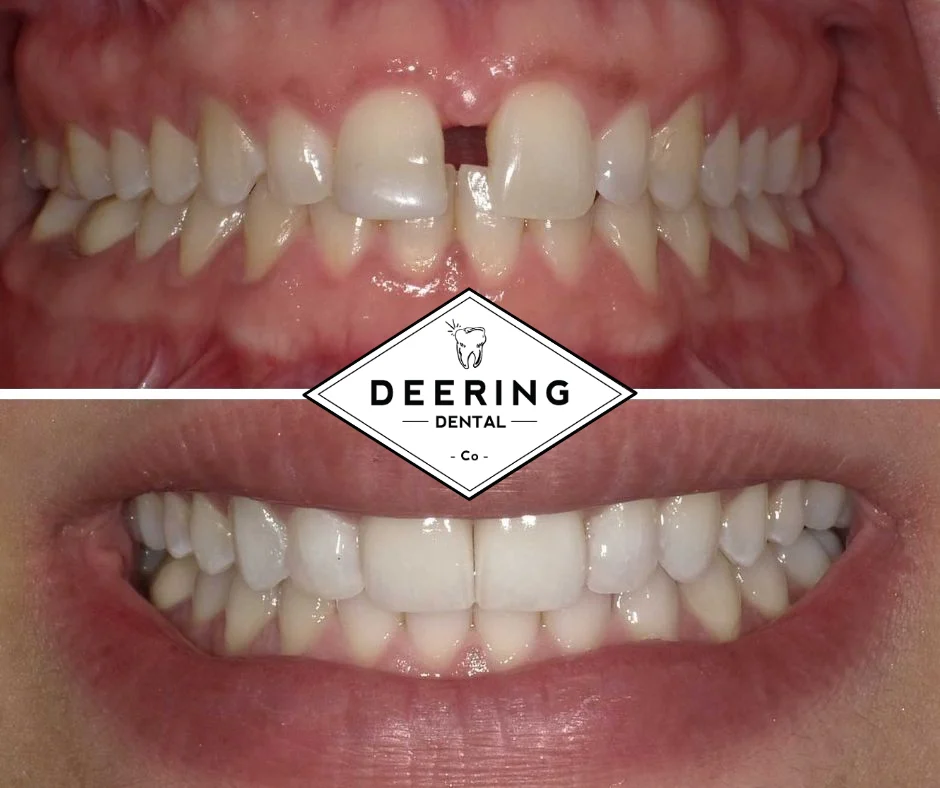
Very possibly, even if you’ve assumed you’re not. Clear aligners can treat crowding, gaps, crossed or turned teeth and many bite problems. Some cases need a little more, like a veneer to correct a tooth’s shape, and Dr. Pinto will tell you that at your consult, before you start.
Most cases take 10 to 14 months. You’ll see us in person once a month along the way, so Dr. Pinto can check that every tooth is moving to plan.
All the time, except when you eat or drink anything other than water. Plain water is fine with them in. It usually becomes routine within the first few weeks.
You’ll usually feel some pressure or tenderness for a day or two when you switch to a new set. That’s your teeth moving, and it fades quickly.
For your bite, often yes. Bringing your teeth together evenly spreads the pressure, so no single tooth takes the brunt. For breathing, it depends on the cause. If the shape of your arches is limiting how much room your tongue has, aligners can help, and they’re often one part of a larger plan. Aligners aren’t a stand-alone treatment for sleep apnea, which is why we check your sleep first when it may be involved.
We may recommend a take-home sleep test. We give you the device to wear at home, and Dr. Pinto reviews the results. If sleep apnea is suspected, the results go to a physician for an official diagnosis. Then Dr. Pinto sits down with you, in person or over Zoom, to walk through what they show. She’ll tell you what she recommends, whether and how Invisalign may help, and whether a partner specialist like an ENT should be part of your plan.
How we approach sleep and airwayWe see guests from age 13. Starting while your teen is still growing can give us more room to guide the bite and support airway development than we’d have later. We’ll tell you at the consult whether now is the right time.
The software’s proposed plan is built mostly around how your teeth look, not how they function. Dr. Pinto adjusts every tooth by hand, often for up to 90 minutes per case, so your plan also accounts for your bite, your airway, your tooth shapes and your goals.
How we plan your caseRetainers keep your teeth where they belong. You’ll wear them like aligners for the first two to three months, then nightly from then on. Three spare sets are included, along with one smile refinement within three years if a tooth needs it.
Find out what your smile can do.
Your consult includes a 3D scan and smile preview, a bite and airway analysis, and time with Dr. Pinto. You’ll leave knowing what’s possible, how long it would take, and whether aligners alone will get you there.
Serving Miami, Coral Gables, Pinecrest, Coconut Grove, Palmetto Bay, South Miami, and Cutler Bay.