
Dentists Weigh In: Is Nano-Hydroxyapatite Toothpaste Better Than Fluoride?
Jan. 26, 2026
Is nano-hydroxyapatite really a fluoride alternative? My honest take
By Dr. Yenile Y. Pinto, DDS
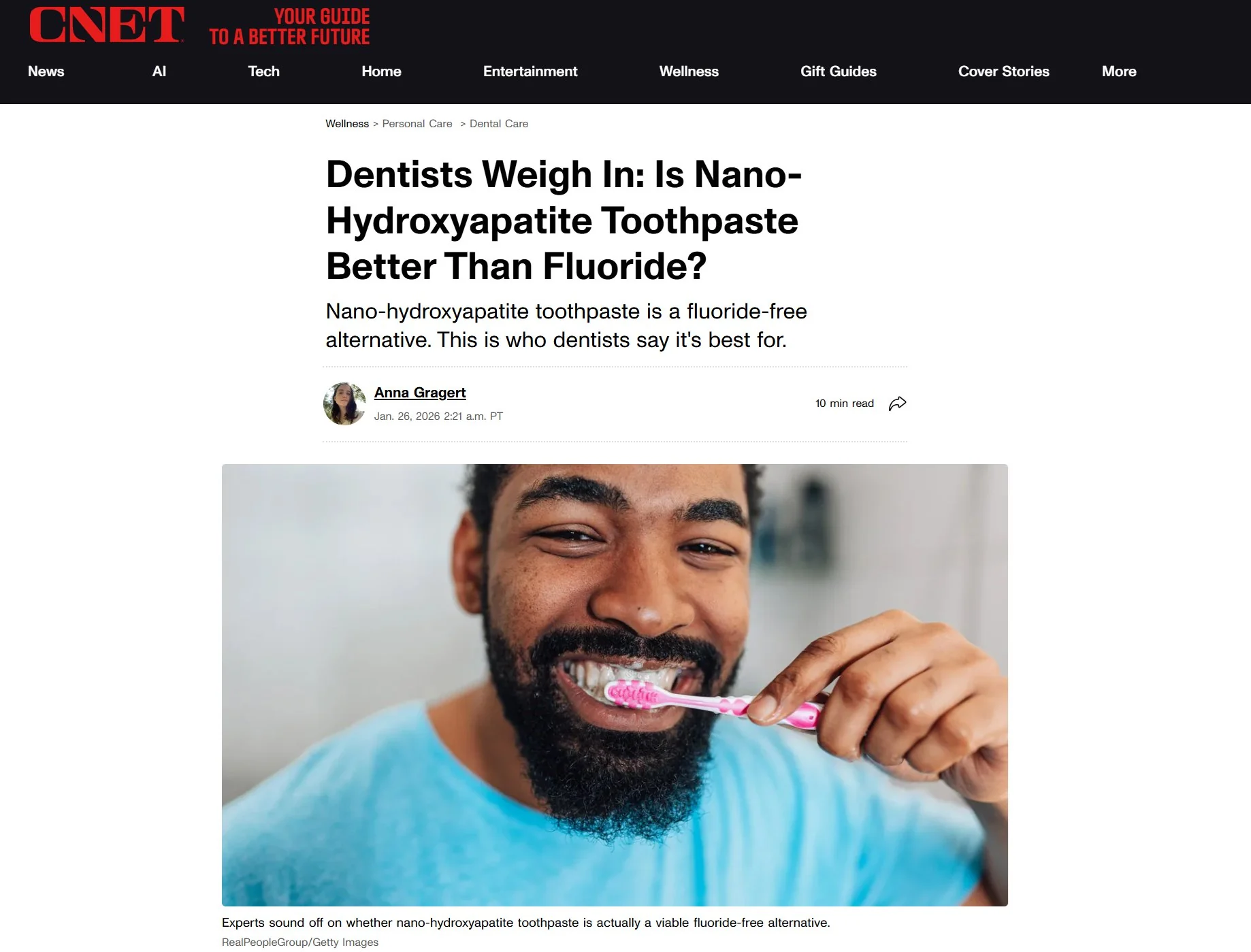
Nano-hydroxyapatite has become one of the most-asked-about ingredients in my office, so when CNET pulled together a panel of dentists to settle whether it can actually replace fluoride, I was glad to weigh in.
Here’s the honest version. A lot of the interest is being driven by the broader debate over fluoride in the water supply. My own view there is straightforward: I don’t think fluoride needs to be added to our drinking water — that should be a personal choice. But that’s a separate question from whether fluoride has a place in dentistry, and it does. Used deliberately, for the right person at the right level of risk, it’s still a useful tool.
Toothpaste is where that nuance actually matters, and the answer comes down to your cavity risk — not a trend.
For most of my patients, especially those with low to moderate cavity risk, nano-hydroxyapatite is an excellent option; gentler on the mouth, less drying and effective at rebuilding early damage. For people with high cavity risk, fluoride might still be the best choice, at least short term.
What I like about nano-hydroxyapatite is that it works with your biology rather than around it. It helps remineralize early enamel damage, calms sensitivity, and supports a healthier oral microbiome — especially when it’s paired with the basics that actually move the needle: good home hygiene, a sensible diet, hydration, and nasal breathing.
It isn’t a miracle cure, and it isn’t automatically right for everyone. For someone at high cavity risk, I’ll often recommend a toothpaste that uses both ingredients. The smart move isn’t picking a side in the fluoride wars — it’s knowing your real cavity risk and choosing accordingly.
If you’ve been wondering whether to make the switch, it’s exactly the kind of thing worth a quick conversation at your next visit .
Keep Smiling,
Dr. Yenile Pinto


