
https://www.romper.com/pregnancy/pregnancy-teeth
Aug. 13, 2022 (updated Feb. 20, 2024)
What’s normal for your gums in pregnancy — and the morning-sickness mistake to avoid
By Dr. Yenile Y. Pinto, DDS
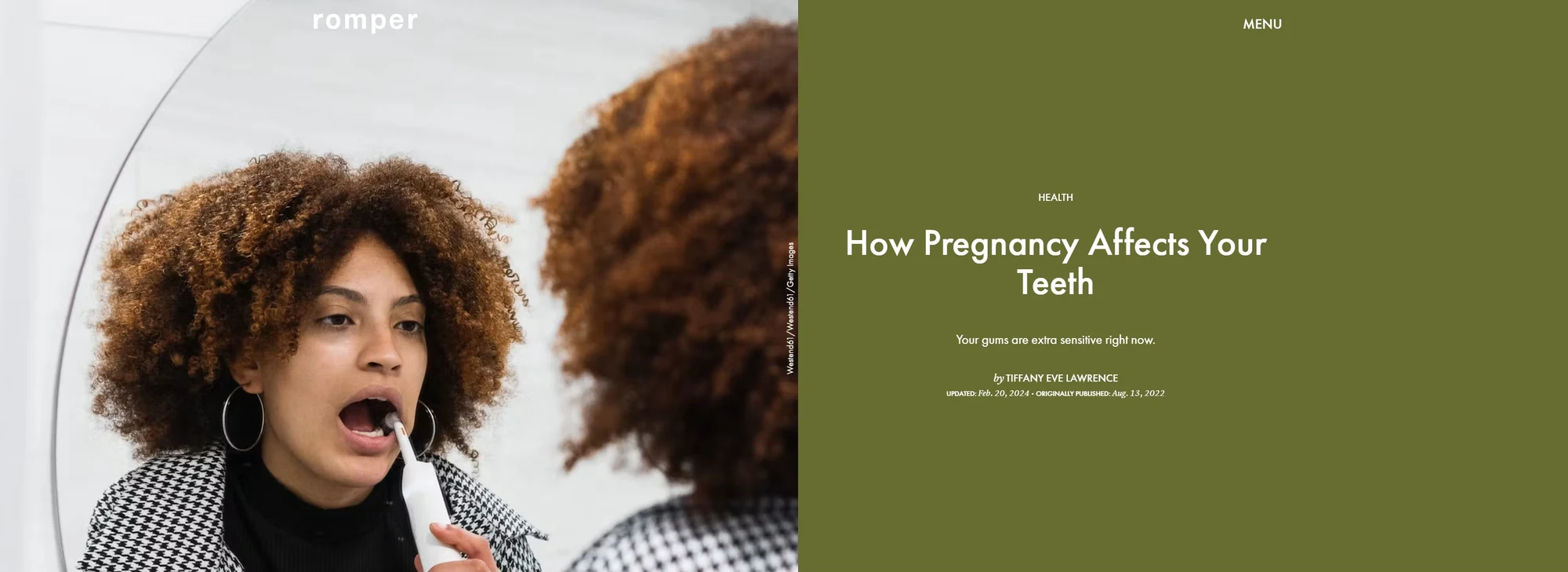
If your gums have turned tender and a little prone to bleeding during pregnancy, and brushing suddenly makes you queasy, you’re not doing anything wrong — your body is. When Romper asked me to explain what pregnancy does to your mouth, the first thing I wanted expecting moms to hear is that these changes are common, and they’re manageable.
The shift is hormonal. Higher estrogen and progesterone make gum tissue more reactive, so it swells and bleeds more easily — which is why your mouth is part of your whole-body picture, not something separate from it. Most expecting moms notice some version of this; it doesn’t mean your teeth are falling apart. Add morning sickness to the mix, and there’s a second issue most people get backwards.
If you’re like me and suffer with morning sickness and acid reflux during pregnancy, you should avoid brushing right after vomiting since the brushing action along with the acids in your mouth can cause the enamel of your teeth to wear down. Instead, rinse with water and wait 20 minutes before brushing.
I lived this through my own pregnancies, so I say it from experience: scrubbing acid into softened enamel does more harm than waiting ever will. Rinse, give it twenty minutes, and reach for a rinse that helps balance your oral pH rather than one that simply stings. Your enamel doesn’t grow back, so the goal in these nine months is to protect what you have.
The most powerful step, though, happens before the bump. Taking care of you is taking care of your baby, and the easiest pregnancy is the one you walk into with your dental work already handled. If you’re planning ahead — or already expecting and overdue for a check — that’s worth a visit . Either way, this is one part of pregnancy you can stay ahead of.
Keep Smiling,
Dr. Yenile Pinto
P.S. A lot of this comes down to what you reach for at the sink. If you want the short version, here’s the clean oral-care list I actually use at home — enamel-safe, microbiome-friendly, and no sponsorships behind it.


