Treating A Cavity Without a Drill?
I Was Skeptical Too.
No needles. No drilling. No filling. When I tried a new way to help teeth heal themselves, my own husband became the first patient.
“That’s it? Did you even do anything?”
That was my husband’s reaction after I finished treating two of his cavities. No injection, no numb lip, no drilling. Just a clear liquid painted onto his teeth, and twenty minutes later, he was out of the chair.
If everything went the way the research suggested, those two teeth might never need fillings.
It sounded almost too good to be true, which is exactly why I was nervous. Peter was the first person I’d ever treated this way, and I wouldn’t know whether it had worked until months later.
But there’s a reason I wanted to try it, and it has to do with something most people don’t realize about cavities.
Not every cavity needs a filling. Some can actually heal before a drill ever touches the tooth.
The Problem With a Filling Isn’t Just the Drill
Most of us grew up believing that once you get a cavity, there’s only one solution. You get numb, the dentist drills away the decay, a filling goes in, and the problem is solved.
Sometimes that really is the best treatment. But there’s something about fillings that most people don’t realize.
Your first filling is rarely your last.
Even a beautifully placed filling has a limited lifespan. Over time, the material can wear, the edges can deteriorate, or new decay can develop around it. When it needs to be replaced, we have to remove a little more tooth.
Eventually, what started as a tiny filling can become a larger one, then perhaps a crown, and sometimes even a root canal.
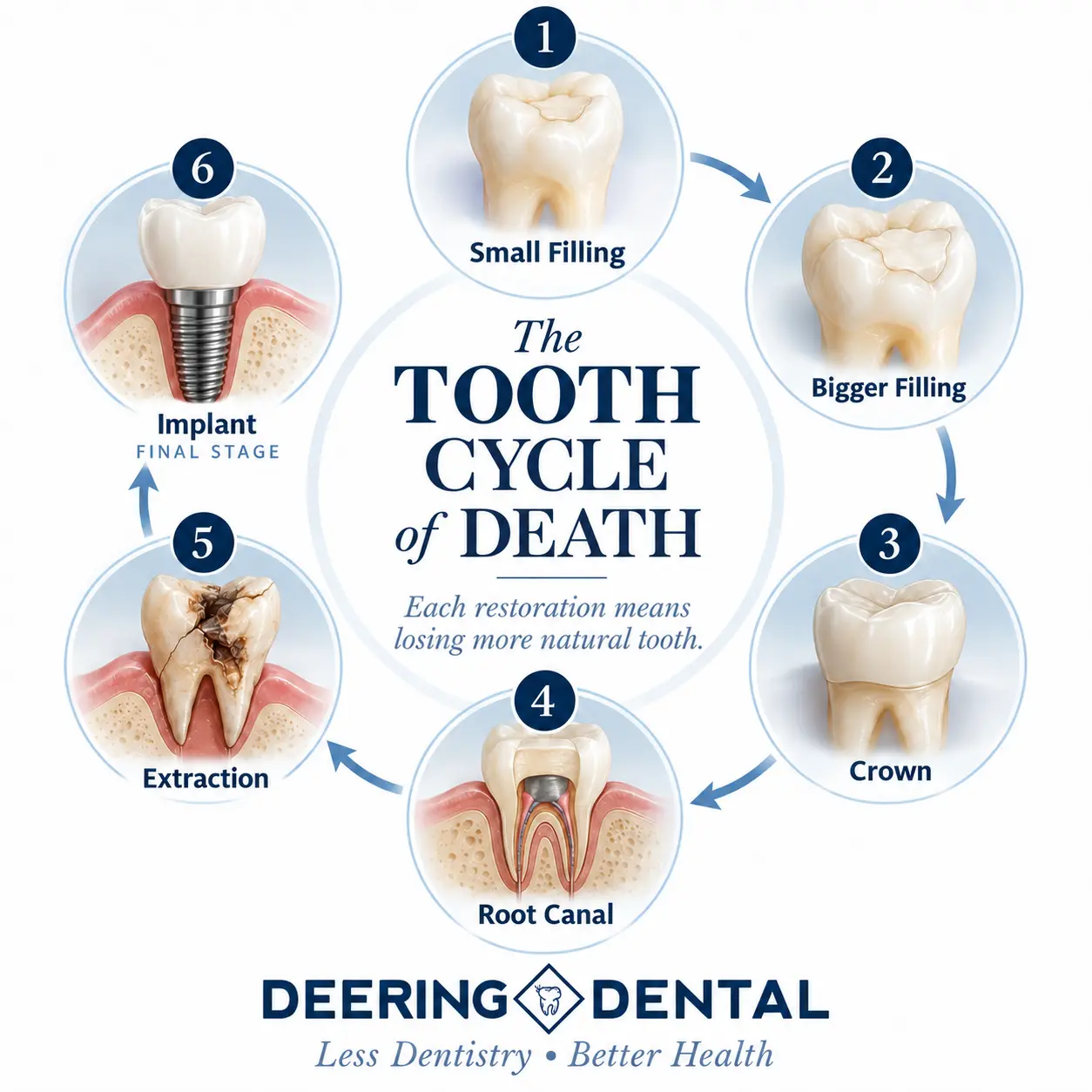
Dentists call this the “Tooth Cycle of Death.” It’s a rather dramatic name, I’ll admit, but after nearly twenty years of practicing dentistry, I’ve seen it happen more times than I care to count.
It’s one of the reasons I became so passionate about biomimetic dentistry, an approach focused on preserving as much of your natural tooth as possible. Because as remarkable as modern dental materials have become, there’s still nothing quite like the tooth you were born with.
So when I came across research suggesting we could help certain cavities heal themselves before they ever needed fillings, I was intrigued.
And more than a little skeptical.
Could a Tooth Really Heal Itself?
A few years ago, I began reading about something called guided enamel regeneration. Researchers had developed a treatment designed to help teeth repair the damage caused by early decay.
The best part? No drilling.
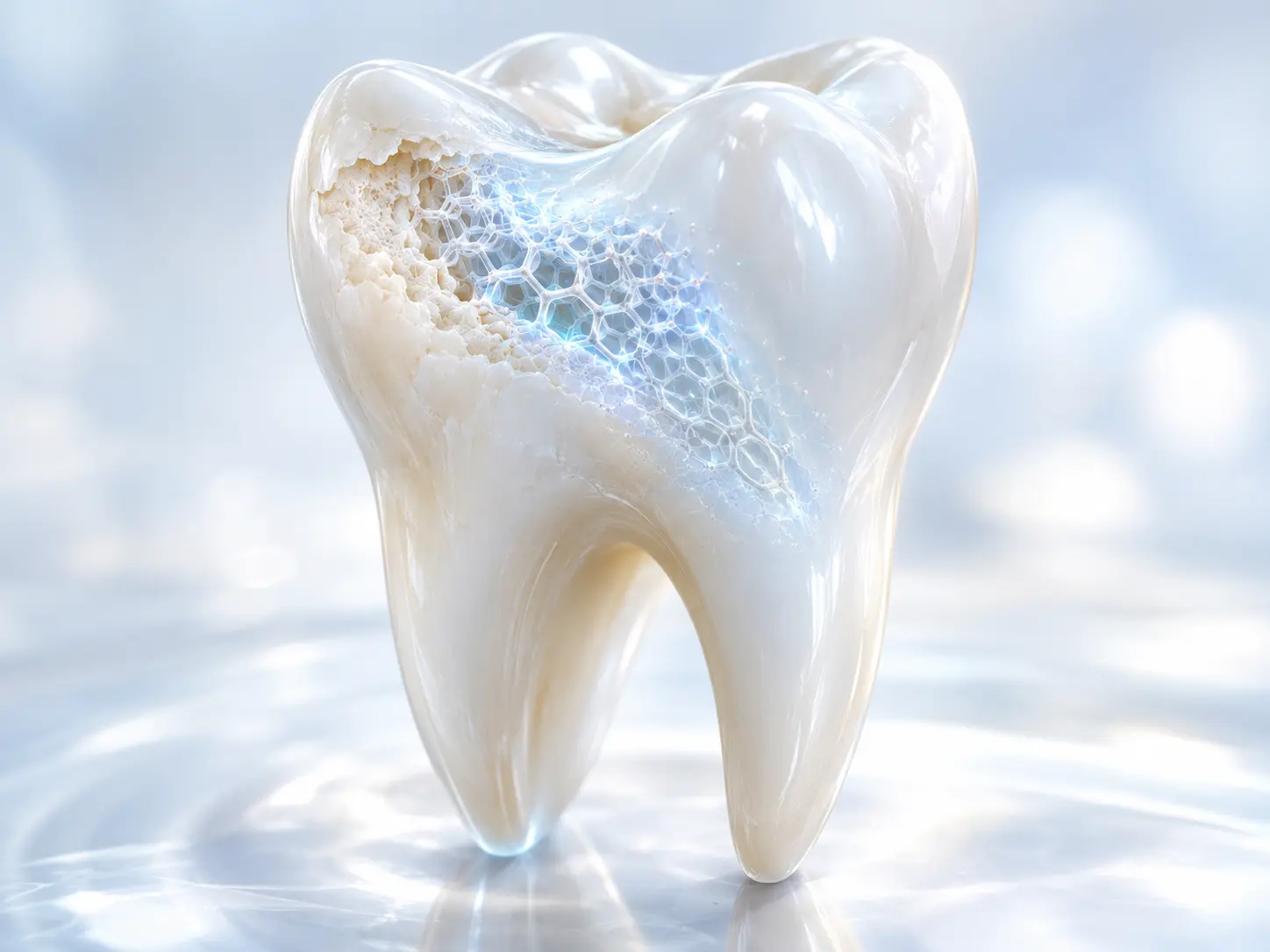
The treatment uses a clear liquid containing a peptide, a small chain of amino acids that helps imitate the way our bodies originally built enamel.
Think of it like scaffolding used to repair a damaged building. The liquid penetrates the weakened enamel and creates a tiny framework that attracts minerals from saliva. Over time, those minerals help rebuild the damaged area from within.
In other words, instead of drilling away the damaged tooth and replacing it with something artificial, we’re helping the tooth heal itself.
I found the science fascinating, but I’ve been a dentist long enough to know that promising research doesn’t always translate into equally impressive results in the dental chair. I wasn’t going to start recommending something just because it sounded innovative. I wanted to know whether it actually worked.
As it happened, I had a rather convenient volunteer at home.
My Husband Became Patient Number One
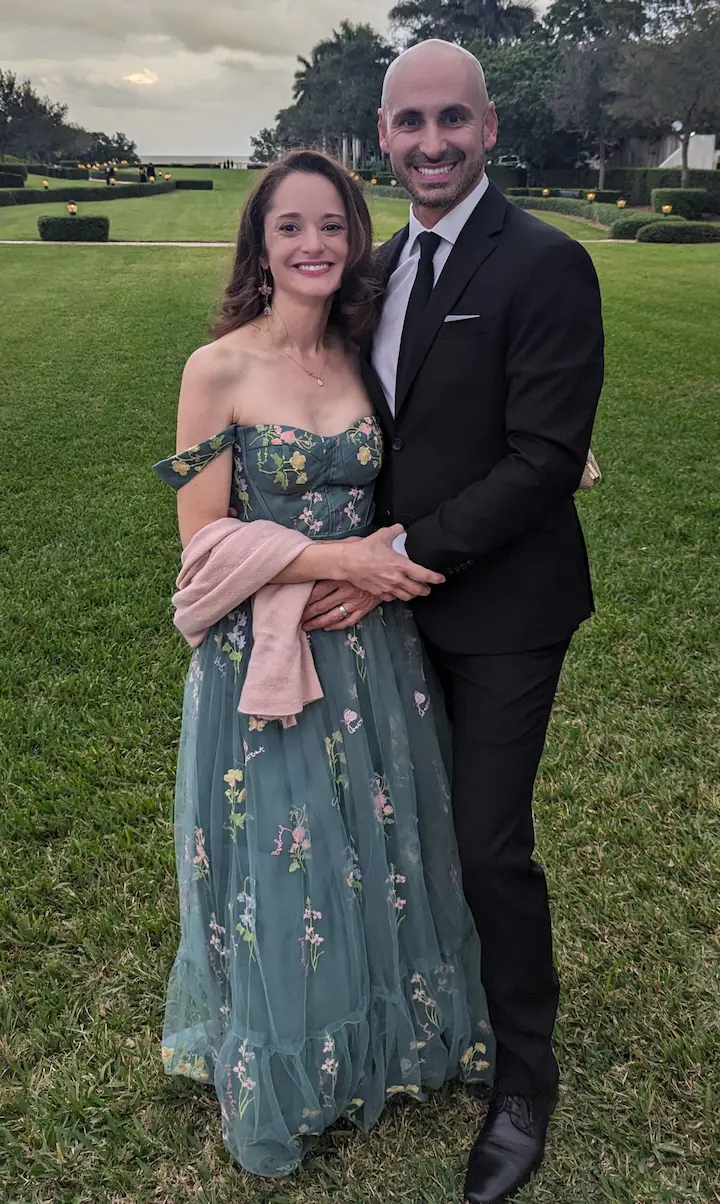
Peter has never been particularly enthusiastic about dental treatment. He’s had enough unpleasant experiences in the past that anything involving a drill is something he’d happily avoid.
So when I found two early cavities on his X-rays, I thought he might appreciate trying something different.
Both were still confined to the enamel, the hard outer layer of the tooth. Normally, I wouldn’t have drilled them anyway. I would have monitored them, worked on preventing further decay, and hoped they didn’t get worse.
But now I had another possibility: instead of simply watching those cavities, perhaps I could help them heal.
I explained the research, what we knew, and what we didn’t. Naturally, his first question was whether it would hurt.
“No needles, no drilling, nothing sharp,” I told him.
That was apparently all he needed to hear.
I prepared the teeth, applied the liquid, and twenty minutes later we were finished. He sat up, ran his tongue over his teeth, and looked at me.
“That’s it? Did you even do anything?”
I laughed, although privately I was wondering almost the same thing. The procedure had been remarkably simple, but I wouldn’t know whether it had worked until I could compare his X-rays several months later.
Six months passed before I got my answer.
Neither cavity had progressed. Both were stable, which was exactly what I’d hoped to see. I’ve continued checking those teeth at every visit, and two years later, neither has needed a filling.
I was thrilled. Peter was mostly happy he’d avoided the drill.
Of course, two teeth in one guest don’t prove a treatment works for everyone. But the results were encouraging, and together with the published research, gave me the confidence to begin offering it to other guests.
Since then, I’ve used this approach on
What excites me most isn’t simply that we can treat some cavities without needles or drills. It’s that we may be able to prevent those teeth from ever needing their first filling.
And considering we want our natural teeth to last a lifetime, that’s a pretty remarkable possibility.
There’s One Catch
Timing is everything.
Early decay begins by weakening the enamel, the hard outer layer of your tooth. While that surface is still intact, we may be able to help it heal. But once a physical hole forms or the decay becomes too advanced, a filling may be necessary.
Here’s what makes that window so easy to miss: the cavities most likely to benefit from this treatment are usually the ones you can’t feel.
There’s no toothache, no sensitivity, and often nothing you’d notice in the mirror. You can brush, floss, eat well, and feel perfectly fine while an early cavity is quietly eating away at your tooth.
By the time something starts hurting, the opportunity to treat it without drilling may already be gone.
That’s why I believe dentistry should be about more than finding problems that are large enough to fix. We should be looking for the small changes that give us a chance to prevent bigger problems in the first place.
One Question Worth Asking Your Dentist
The next time a dentist tells you that you have a cavity, whether it’s me or someone you’ve been seeing for twenty years, I’d encourage you to ask:
“Has the decay broken through the enamel yet?”
If it hasn’t, you may have options that don’t involve drilling. Those could include treatments that help your tooth heal itself, changes to your daily routine, or simply monitoring the area carefully.
Not every early cavity is a candidate for guided enamel regeneration, and some teeth really do need fillings. The important thing is understanding why a particular treatment is being recommended.
If your dentist recommends drilling an early cavity without explaining the alternatives, I’d strongly consider getting a second opinion. That doesn’t necessarily mean your dentist is wrong, but once healthy tooth structure has been removed, you can’t put it back.
I’m not suggesting we should avoid fillings when they’re necessary. I place restorations every week, and I’m grateful for what modern dentistry allows us to do.
I just believe we should do everything reasonably possible to prevent guests from needing them in the first place.
The goal shouldn’t be to have the nicest fillings. It should be to need as few fillings as possible.
Healthy Teeth Start at Home
One of the things I wish more people understood is that cavities aren’t simply the result of forgetting to brush or floss.
Your saliva, the bacteria living in your mouth, your diet, and how frequently your teeth are exposed to acids all influence whether decay develops. It’s why two people can have nearly identical brushing habits and completely different dental health.
In my practice, we spend a lot of time looking at why guests are developing problems, rather than just fixing the damage. Sometimes that leads us to a treatment like guided enamel regeneration. Other times, a few changes to someone’s daily routine can make a meaningful difference.
Which reminds me of something guests ask me about constantly: dental products.
“What toothpaste do you use?”
“Is this mouthwash actually good for me?”
“What do you buy for your own family?”
I understand the confusion. Have you walked down the oral-care aisle lately? There are dozens of products making all sorts of promises, and it’s not always easy to separate good science from clever marketing.
As a functional and biomimetic dentist, I spend quite a bit of time researching these things. I’m particularly careful about the products I bring into my own home, and with five children, we go through plenty of toothpaste.
So I finally put together a list of the dental products I personally use and trust.
What’s in My Family’s Bathroom Cabinet?
It’s a collection of the exact products I use for myself and my family, along with why I’ve chosen them.
These aren’t sponsored recommendations. I don’t receive commissions, affiliate payments, or any financial benefit from the products on the list. They’re simply the ones I’ve researched and feel comfortable using with the people I care about most.
I thought it might be helpful to share, especially if you’ve ever stood in front of an entire wall of toothpaste wondering whether the expensive one is actually any better.
And if you’re curious whether an early cavity of your own might be treatable without drilling, I’d encourage you to bring it up at your next dental visit. You may be surprised by the options available.
At Deering Dental, preserving natural teeth and understanding why dental problems develop are central to how we care for our guests.
Because the best dentistry is the dentistry you never need.


