Woman in her late 30s looking in the bathroom mirror, contemplating early perimenopause symptoms

Perimenopause Dental Symptoms Most Women Miss | Deering Dental

What Your Dentist Sees Before You Know You’re in Perimenopause

Four signs I’m catching in women in their late thirties and forties, and why the mouth gets there first. 

By Dr. Yenile Y. Pinto DDS 

(I’ve put together a Perimenopause Mouth-Body Checklist at the end of this article. It’s the checklist I wish every woman in her late thirties and forties had.) 
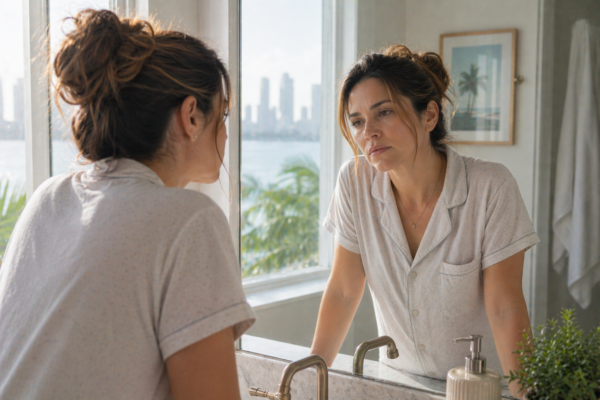
Woman staring into mirror wondering why she is tired.

A few months ago, a patient walked into my office that We’ll call Veronica.

She was 37.

Late thirties. Two kids.

The kind of busy, capable woman who powers through just about anything.

But on her intake that day, she’d answered “yes” to a few of the quiet questions we always ask:

Do you wake up rested?

Do you wake up with a headache?

Does it feel like you’ve been clenching or grinding at night?

Three yeses.

Three little warning signs.

So we ran a sleep screen.


What We Found (And What We Didn’t)

On paper, Veronica didn’t meet the classic definition of sleep apnea.

Classic apnea requires you to stop breathing for at least 10 seconds at a time.

Eight seconds doesn’t count.

Six seconds doesn’t count.

But her sleep was still a mess.

When I looked at her sleep position data, she qualified as mild sleep apnea in the back-lying position.

Your sleep is disrupted enough to wreck your days, but not dramatically enough to show up on the standard test.

Then I looked at her anatomy.

Her airway structure was good. Some crowding of teeth, no narrowed palate, no obvious mechanical culprit that seemed to contribute meaningfully to her chronic fatigue.

Which left me with a question I’ve been asking more and more often:

If it’s not the anatomy… what is it?

I sent her to her primary care doctor for a hormone panel.

The results came back.

Veronica, at 37, was already showing the early hormonal changes of perimenopause.

She was floored.

So was she the first patient to hit me with this pattern?

Not even close.

I’ve now caught this several times. Women in their late thirties and forties, bewildered about their sleep, their mouths, their tension, their fog.

And every time, the same dots connect.

None of them had ever heard the word perimenopause used about themselves.

And why would they?

No one ever told them to look for it.


What Perimenopause Actually Is

(And Why It Sneaks Up On You)

If you’ve barely heard the word before, you’re not alone.

Most of the women who walk into my office haven’t either.

Or they’ve heard it and assumed it applies to women much older than they are.

Perimenopause is the transition phase leading up to menopause.

It can start as early as your mid-thirties.

For most women it’s in full swing by their mid-forties.

And it can last anywhere from a few years to over a decade.

During that window, estrogen doesn’t drop in a neat, straight line.

It fluctuates. Sometimes wildly. Before it eventually settles low.

Those fluctuations are what drive the symptoms.

The mainstream conversation is mostly about hot flashes and mood swings.

But estrogen doesn’t just regulate your menstrual cycle.

It regulates:

  • Inflammation.
  • Collagen production.
  • Bone density.
  • Sleep architecture.
  • Saliva production.
  • And the bacterial balance of every mucosal tissue in your body.

Including your mouth.

Which is why the mouth is often one of the first places perimenopause shows up.

And one of the last places anyone thinks to look.


The Five Things I’m Quietly Seeing More Of

Once I started paying attention, the pattern was everywhere.

Here’s what I’m seeing in women in their late thirties, forties, and early fifties.

Often long before they think they’re “at that age.”

1. Gums That Suddenly Bleed, Even With Perfect Hygiene

Estrogen helps maintain the blood vessels and connective tissue of your gums.

As it fluctuates, gum tissue becomes more vascular, more reactive, and more prone to inflammation.

Even when nothing else has changed.

Patients will tell me:

“I haven’t changed anything. Same toothbrush. Same floss. Same everything. Why am I suddenly bleeding?”

A 2025 review in Cureus documented that estrogen receptors are present throughout the gums and oral mucosa.

And that declining estrogen directly increases susceptibility to gingival inflammation, bleeding, and periodontal disease in perimenopausal and postmenopausal women.

Translation: it’s not your brushing. It’s your hormones.

2. Dry Mouth That Shows Up Out of Nowhere

Saliva is your mouth’s single most important defense.

It neutralizes acid.

It remineralizes enamel.

It washes away food.

It keeps your oral microbiome in balance.

Estrogen helps regulate your salivary glands.

When it dips, saliva drops. Sometimes dramatically.

And dry mouth doesn’t just feel uncomfortable.

It rapidly accelerates cavities, gum disease, and bad breath.

A case-control study in Gerodontology found a direct correlation between the severity of dry mouth symptoms and the decline in salivary estrogen in post-menopausal women.

Multiple reviews have since confirmed that hormone therapy can partially restore salivary flow.

Strongly suggesting the connection is hormonal, not behavioral.

I’ve seen women who went twenty years without a cavity suddenly develop multiple cavities in a single year during perimenopause.

Not because they changed anything.

Because their saliva did.

3. Weird, Unexplained Mouth Sensations

This one surprises patients every time.

Some women start developing a condition called geographic tongue. Patches on the tongue that look almost like a map.

Or burning tongue syndrome. A sensation of burning pain in the mouth. Sometimes triggered by food, sometimes appearing out of nowhere.

The exact mechanism isn’t fully understood.

But the pattern lines up with hormonal shifts.

And it often responds to rebalancing the things that are within your control. Particularly vitamin and mineral deficiencies that become more common during this transition.

If something in your mouth suddenly doesn’t feel right and you can’t explain it, that’s worth paying attention to.

4. Grinding and Clenching That Wasn’t There Before

This one is huge.

Perimenopause disrupts sleep architecture.

Women spend less time in deep, restorative sleep and more time in fragmented, lighter stages.

And during fragmented sleep, the body is much more likely to clench and grind.

Add rising cortisol (another perimenopause signature), and you get the perfect storm:

Waking up with a sore jaw.

Morning headaches that don’t respond to ibuprofen.

Neck and shoulder tension that won’t resolve.

Teeth that start chipping, cracking, or wearing flat.

A review in the Journal of Mid-Life Health lists bruxism (sleep grinding and clenching) as one of the recognized sleep disorders associated with the perimenopausal and menopausal transition.

Driven by the combination of sleep fragmentation, elevated stress hormones, and the increased prevalence of sleep-disordered breathing in this population.

Most women are told this is “just stress.”

It isn’t.

It’s often hormonal sleep disruption expressing itself through the jaw.

A nightguard can help as a management tool.

You can’t wear your teeth down if there’s plastic between them.

But it isn’t the fix.

The fix is finding what’s actually driving the grinding.

5. Airway Changes You Didn’t See Coming

You may have read my earlier piece on how a $40 nasal strip changed my husband’s life.

Airway issues and snoring aren’t supposed to be a midlife women’s issue.

But the research is strikingly clear.

The landmark Wisconsin Sleep Cohort Study, published in the American Journal of Respiratory and Critical Care Medicine, found that postmenopausal women had 3.5 times the odds of moderate-to-severe sleep-disordered breathing compared to premenopausal women.

Even after adjusting for age, body weight, and other risk factors.

Estrogen and progesterone help maintain muscle tone in the upper airway.

As they decline, the soft tissue at the back of the throat becomes more prone to collapse during sleep.

Combine that with weight redistribution, fragmented sleep, and rising cortisol, and suddenly a woman who never snored a day in her life is snoring. And not sleeping well. Every night.

And poor sleep accelerates everything else on this list.

“But I’m Just Tired Because of the Kids…”

I get this one constantly.

And look, if you have a newborn, yes. You’re tired because of the newborn.

But if your youngest is out of the newborn stage, your sleep should be restful when it happens.

Sleep is when the body repairs.

It’s when hormones balance.

It’s when memory consolidates.

You shouldn’t be waking up in a fog if the kids aren’t actually waking you up.

The timing of perimenopause is cruel, honestly.

It lines up perfectly with the most demanding, labor-intensive parenting years.

The exact stretch of life when it’s easiest to blame everything on the children and keep pushing through.

  • So you write off the exhaustion.
  • You write off the brain fog.
  • You write off the morning headache.
  • You write off the fact that you’ve been clenching your jaw so hard your neck is tight.

None of it feels worth mentioning at your annual physical.

But when you zoom out, those aren’t random data points.

They’re a pattern.

And the pattern has a name.

Can You Actually Postpone Perimenopause?

This is the question every patient eventually asks me.

The honest answer: you can’t stop it. It’s biology.

But you can absolutely change how it hits you.

And increasingly, the research is pointing at a handful of levers that seem to soften the transition, shorten the rough part, and protect the tissues (including oral tissues) that take the biggest hit.

Here’s where the mouth-body connection gets genuinely interesting.

Lever 1: Protect Your Oral Microbiome

A healthy, diverse oral microbiome is one of the body’s most underrated anti-inflammatory systems.

Certain oral bacteria produce nitric oxide, which supports blood vessel health, which supports estrogen-dependent tissues throughout the body.

When you kill those bacteria daily with harsh antiseptic mouthwash and aggressive toothpastes, you’re not just affecting your breath.

You may be quietly accelerating the vascular and inflammatory changes that make perimenopause harder.

(If you missed my earlier piece on this, you can read it here.)

I’ve also included a link to a list of Oral Microbiome safe products I personally use and trust at the end of this article.

Lever 2: Protect Your Sleep and Airway

Deep sleep is when the body repairs, balances hormones, and clears inflammation.

Every night you lose to fragmented breathing is a night your body falls further behind.

If you’re waking up tired, foggy, or with a sore jaw:

That’s your body telling you something isn’t working.

An airway assessment, a sleep analysis, and in some cases a simple nighttime appliance can be the single highest-leverage thing a woman in her forties does for her long-term health.

Lever 3: Catch the Silent Damage Early

The teeth-grinding.

The gum inflammation.

The enamel wear.

None of it feels urgent.

Until one day it is.

One study cited in Cleveland Clinic Journal of Medicine found that for every 1% annual decrease in whole-body bone mineral density, the risk of tooth loss increased more than fourfold.

The jaw is not separate from the skeleton.

What happens to your bones during and after this transition happens to your jaw, too.

By the time a perimenopausal woman is sitting in my chair with a cracked molar or a loose tooth, the window for a simple, conservative fix has usually closed.

This is why the women I see doing best in this transition are the ones who treat their forties as a protection decade.

Not a decade where they wait for something to break.

Why Your Dentist May Spot It Before Your Doctor Does

Here’s the part I didn’t expect when I started connecting these dots.

Most women see their dentist twice a year.

They see their primary care doctor once, maybe.

And they may not bring up symptoms that don’t feel “gynecological” (like jaw pain, dry mouth, or bleeding gums) at their OB-GYN visit.

Which means the dental chair is often the first place these early signs get noticed by anyone other than the woman herself.

And if your dentist screens for airway and sleep, as we do at our office, it’s often the first place the dots actually get connected.

If you’ve been told your symptoms are “normal for your age”…

And you’re a woman between 35 and 55…

Your mouth may be telling a bigger story than you’ve been given credit for.

What I Tell My Patients

Perimenopause isn’t something to be afraid of.

It’s a transition.

And like every transition, it goes better when you understand what’s happening and have a plan.

The women I know who move through this phase gracefully aren’t lucky.

They’re informed.

They treat their body (including their mouth) as an early warning system, not a problem to silence.

Veronica didn’t have anything “wrong” with her that day she came in.

Her anatomy was healthy.

Her teeth were fine.

But her body was trying to tell her something, and her sleep was the loudest messenger.

Catching it at 37 instead of 47 changed everything for her.

If any of what I described sounds familiar:

The bleeding gums.

The jaw tension.

The dry mouth.

The sleep that fell apart for no reason.

The sense that something just isn’t quite right.

I’d encourage you to stop brushing it off.

You’re not imagining it.

And you’re definitely not alone.

Keep Smiling,

Dr. Yenile Pinto

Functional & Biomimetic Dentist | Deering Dental, Miami, FL
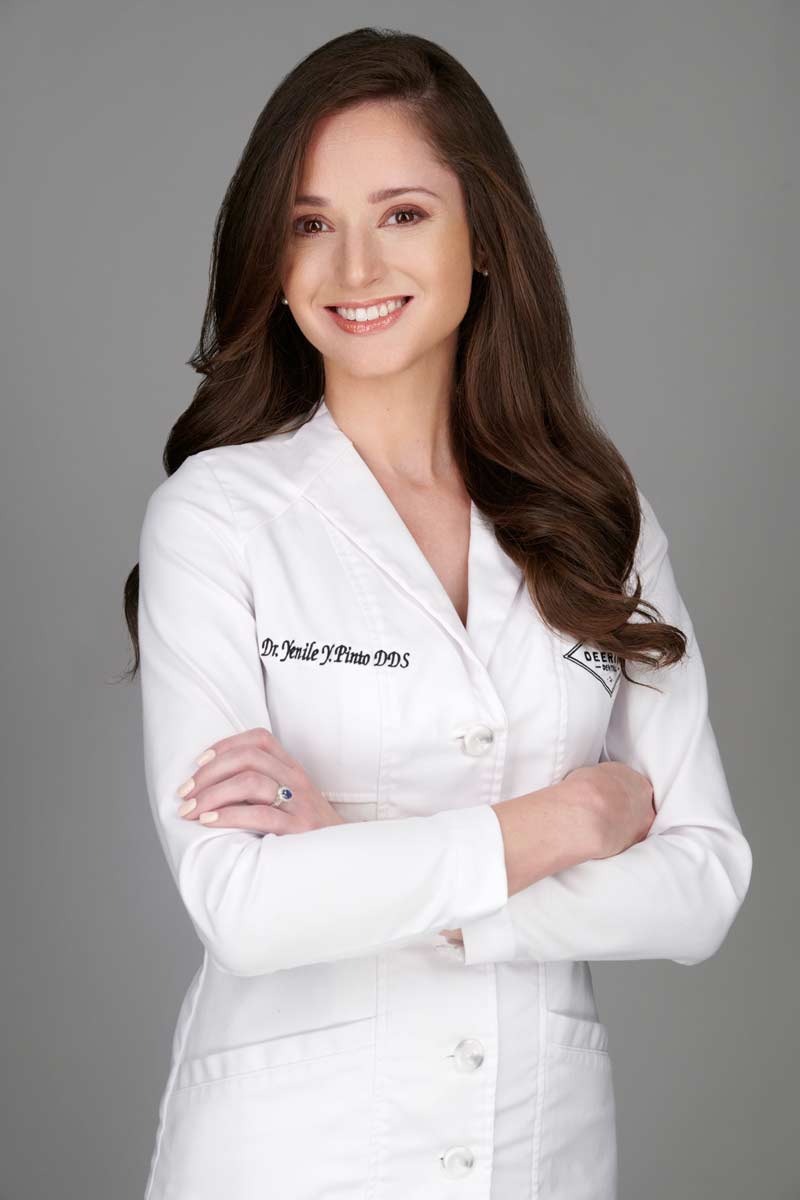
Dr. Yenile Y. Pinto DDS

Want the Full Picture of What’s Going On In Your Mouth?

I’ve put together a Perimenopause Mouth-Body Checklist.

The specific signs I watch for in my practice.

The labs and assessments worth asking your doctor about.

And the small changes that protect your mouth through the transition.

It’s the checklist I think every woman in her late thirties and forties should have.

[Download the Perimenopause Mouth-Body Checklist]

And here’s my list of the of the same clean and microbiome safe oral health products I personally use at home:

[Download Dr. Pinto’s Personal List of Oral Care Products] 

P.S. If bleeding gums, dry mouth, grinding, or disrupted sleep have started showing up in your life, I’d genuinely encourage you to schedule a comprehensive exam and airway assessment.

Knowing exactly what’s happening is the first step toward feeling like yourself again.

[Schedule Your Comprehensive Exam & Airway Assessment]


Sources & Further Reading

Perimenopause, Hormones & Oral Health (Overview)

Jawed S.T.M., Jawed K.T. (2025). Understanding the Link Between Hormonal Changes and Gingival Health in Women: A Review. Cureus. https://pmc.ncbi.nlm.nih.gov/articles/PMC12131131/

Suri V., Suri V. (2014). Menopause and oral health. Journal of Mid-Life Health. https://pmc.ncbi.nlm.nih.gov/articles/PMC3793432/

Menopause and Oral Health: Clinical Implications and Preventive Strategies. (2024). Journal of Mid-Life Health. https://pmc.ncbi.nlm.nih.gov/articles/PMC11601932/

Estrogen, Gum Inflammation & Periodontal Disease

The impact of estrogen on periodontal tissue integrity and inflammation, a mini review. (2025). Frontiers in Dental Medicine. https://www.frontiersin.org/journals/dental-medicine/articles/10.3389/fdmed.2025.1455755/full

Dry Mouth, Saliva & Hormonal Changes

Agha-Hosseini F., et al. Relationship of stimulated saliva 17-beta-estradiol and oral dryness feeling in menopause. Referenced in Suri & Suri (2014), Journal of Mid-Life Health. https://pmc.ncbi.nlm.nih.gov/articles/PMC3793432/

Burning Mouth Syndrome & Geographic Tongue in Menopause

Dahiya P., et al. Burning mouth syndrome and menopause. International Journal of Preventive Medicine. https://pmc.ncbi.nlm.nih.gov/articles/PMC3530300/

Bone Density, Jawbone & Tooth Loss

Friedlander A.H. (2002), as cited in Frutos R., et al. How menopause affects oral health, and what we can do about it. Cleveland Clinic Journal of Medicine. https://www.mdedge.com/ccjm/article/95022/womens-health/how-menopause-affects-oral-health-and-what-we-can-do-about-it

Sleep, Airway & Menopause

Young T., Finn L., Austin D., Peterson A. (2003). Menopausal status and sleep-disordered breathing in the Wisconsin Sleep Cohort Study. American Journal of Respiratory and Critical Care Medicine. https://www.atsjournals.org/doi/10.1164/rccm.200209-1055OC

Mirer A.G., Young T., Palta M., et al. (2017). Sleep-Disordered Breathing and the Menopausal Transition among Participants in the Sleep in Midlife Women Study. Menopause. https://pmc.ncbi.nlm.nih.gov/articles/PMC5266663/

Upper Airway Resistance Syndrome

Guilleminault C., et al. A cause of excessive daytime sleepiness: the upper airway resistance syndrome. Chest. https://pubmed.ncbi.nlm.nih.gov/8404193/

Bruxism, Sleep & Menopause

Attarchi M., et al. (2022). Menopause and Sleep Disorders (review of bruxism, insomnia, and sleep-disordered breathing across the menopausal transition). Journal of Mid-Life Health. https://pmc.ncbi.nlm.nih.gov/articles/PMC9190958/


Continue reading

Quarterly Marriage Getaway

Pizza Night, Marriage Advice, and the Health Hack Hiding in Your Daily Routine

Pizza Night, Marriage Advice, and the Health Hack Hiding in Your Daily Routine

By Dr. Yenile Y. Pinto DDS 

Pinto Family Pizza Night

Everyone loves a big moment.


The epic birthday party.
The extravagant gift.
The vacation that looks like a highlight reel.

Those moments are great.
I’m not here to knock them.

But close your eyes for a second and think back.
What actually made you feel loved growing up?

I’d bet it isn’t the big gift.

It’s something smaller.
Something so consistent it just felt like… home.

The smell of a specific meal every Sunday.
A nickname only your mom used.
The bedtime ritual that never changed,
no matter what kind of day anyone had.

If you’re a parent, you’re creating those moments right now
often without even realizing it.

That’s the thing about traditions.
They’re not an event.

They’re a rhythm.

Friday Night Pizza(The “Small Thing” That Became the Best Part of Our Week)

If you’ve ever tried to eat clean,
you already know the problem.

Cheap takeout doesn’t fit the plan and high-quality delivery gets expensive fast.
Especially when you’re feeding seven people.

So Peter and I started making our own pizza.
Turns out it’s easy. Really easy.

Every Friday: organic ingredients, each of the five girls making her own pizza, the kitchen turning into this happy chaos that somehow feels like the calmest part of our entire week.

One thing we never skip: shredding our own cheese.

Pre-shredded bags are coated in cellulose — essentially sawdust — to keep it from clumping. It’s also why it never quite melts the way it should.

We use a hand crank grater,
and it’s become one of the kids’ favorite parts.
My three-year-old and my one-and-a-half-year-old both want a turn at the crank.

There is something genuinely delightful about watching a toddler take cheese-shredding very, very seriously.

While the dough stretches
and the cheese gets distributed in wildly uneven ways, everyone votes on what movie to watch.

Nobody’s on a phone.
Nobody’s fighting for the remote.

And if you zoom out,
it has nothing to do with pizza.

It’s about what that Friday night creates.

Your ritual doesn’t have to be pizza.
It doesn’t have to be elaborate.
It just has to be consistent.

Because the ritual is the point.
The activity is just the container.

The Marriage Advice That Changed Everything

Life gets busy. Really busy.

And your relationship that matters most starts running on whatever energy is left over at the end of the day.

When Peter and I got married,
his father gave him advice
I’m convinced has been one of the quiet anchors of our marriage.

He said:
The two of you are the foundation.
Everything else gets built on top of it. 
And that foundations needs to protected.

His advice was simple:
At least once a quarter, get away. Just the two of you.

Even if it’s just a two-night staycation right here in Miami.

Not expensive. Not complicated.
Just protected.

We’ve followed that advice since the beginning.

And every single time,
we come home feeling more connected and ready to tackle whatever life has in store for us. Together.

It doesn’t need to be a trip to Tuscany.
It just needs to be intentional, because it’s during these little getaways that conversations and special moments that never seem to happen in the hectic day to day suddenly come to the surface.

If your relationship doesn’t have a version of this, it might be worth a conversation tonight.

Quarterly Marriage Getaway

Dr. Pinto & Peter on a quarterly getaway to Key Largo

It’s Not Just a “Nice Idea.” Research Backs It Up.

A Harvard study on relationship rituals found that:

“Commitment to relationship rituals is associated with emotional benefits and greater romantic relationship satisfaction.
— Garcia-Rada, Sezer & Norton, Harvard Business School (2019)

And a study in the Journal of Child and Family Studies found:

Consistent family routines are associated with children’s well-being, providing predictable structure and an emotional environment that supports social competence and reduces behavioral problems.
— Hosokawa, Katsura et al. (2023)

The research is clear.

The small consistent things build something the big moments simply cannot.

The Same Principle Applies to Your Health

The same logic, (that small, consistent habits compound quietly over time)
applies to your body.

Including your teeth.

The serious dental and health problems most people face didn’t start big.


They grew quietly. 
While life was busy.
While nobody was paying attention. 
From things that were repeated (or skipped) over years.

A little gum recession, ignored.
A micro-crack, missed because it wasn’t caught early.
Mineral loss that never gets reversed
because the home routine fell apart.

None of those things feel urgent in the moment.
Until, one day — they are.

By the time something feels urgent, the window for a simple, conservative fix has often already closed.

That’s not meant to scare you.
It’s meant to reframe something.

The goal isn’t better treatment.


The goal is to build the small routines that make treatment the exception, not the expectation.

A good home routine you can actually maintain — even on the nights you’re exhausted — and regular checkups that catch what’s developing before it becomes a problem.

That’s it. That’s the whole philosophy.

Small solutions now, no drama later.

The real win is when you never need the big procedure.

Whether it’s Friday pizza night,
protected time with your spouse,
or a simple health routine you can actually follow.

It’s never the big moves that shape a life.

It’s the little routines.
The consistent ones.
The ones that quietly compound into everything.

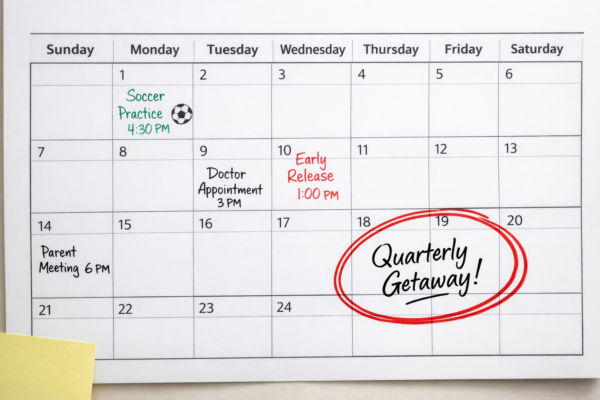
Calendar with quarterly getaway scheduled

If You Want the Simple Habits That Actually Compound

I put together a guide that lays out the small daily habits — the oral health “rituals” that keep little issues from becoming expensive ones.

[ Download The Oral Health Blueprint ]

Keep Smiling,

Dr. Yenile Pinto
Functional & Biomimetic Dentist | Deering Dental — Miami, FL

P.S. As promised — here’s the Pinto Family pizza recipe we’ve perfected.

[ LINK TO OUR FAMILY PIZZA RECIPE ]

It’s simple, it works,
and yes — shredding your own cheese makes it genuinely better.

Enjoy the chaos.

Sources & Further Reading

Garcia-Rada, M., Sezer, O., & Norton, M. I. (2019). Rituals and Nuptials. Harvard Business School Working Paper. https://www.hbs.edu/ris/Publication%20Files/garcia-rada%20sezer%20norton_c5106adb-2f23-4725-bb74-d0ab4f755a5b.pdf

Hosokawa, R., Katsura, T., et al. (2023). Family Routines and Children’s Behavioral Outcomes. Journal of Child and Family Studies. https://link.springer.com/article/10.1007/s10826-023-02687-w

Continue reading

Pinto Family Pizza Night

Dr. Pinto’s Pizza Recipe

The Pinto Family Pizza Recipe

The recipe we’ve tweaked until the kids said it’s better than takeout

Pinto Family Pizza Night

This started as a basic pizza dough recipe and turned into our family’s go-to dinner.

We’ve made it so many times now that we’ve dialed in every little detail — what temperature works best, how long to let it rise, which shortcuts are worth it and which aren’t.

The beauty of this recipe is that it’s designed around a real weeknight.

We make the dough when we get home from school, let it rise while homework and life happen, and it’s ready for pizza time at 6pm.

Most traditional recipes call for letting dough rise overnight, but this one uses a bit more yeast to make it happen faster. I’ve tried the traditional way and honestly, this works just as well. My kids always comment when we go out for pizza that they like our crust better.

This recipe makes 2–3 pizzas depending on size. We double it for our family and get about 5 pizzas with just a little dough left over.

Ingredients:

1 cup

Warm water (105°F)

1 Tbsp

Granulated sugar

1 Tbsp

Active dry yeast

1 Tbsp

Olive oil

2 – 2½ cups

00 Pizza Flour. Plus more for dusting. (All-purpose flour works too)

1¼ tsp

Fine sea salt

1 tsp

Italian seasoning (optional, but recommended)

Making the Dough

If you have a stand mixer with a dough hook attachment, it makes this a breeze and cuts the effort by about 80%.

We do everything right in the mixer bowl: add the water and sugar, mix until the sugar dissolves, add the yeast, then let it sit until frothy. Once it’s bubbling, add the olive oil, flour, salt, and Italian seasoning and mix on the lowest setting until you get a nice dough ball that’s slightly tacky but not super sticky and gooey.

That’s it — no kneading on the counter needed. You can absolutely do this by hand (instructions below), but if you have the mixer, use it.

By hand:

  1. Dissolve the sugar first. Combine warm water and sugar in a large mixing bowl, stir until the sugar dissolves, then sprinkle in the yeast. Give it a gentle stir.
  2. Let it sit for 5 minutes, or until it becomes frothy and bubbly. This tells you the yeast is alive and working.
  3. Gently stir in the olive oil.
  4. Add 2 cups of flour, the salt, and Italian seasoning. Mix with a spatula until a ball begins to form. The dough will still be slightly sticky — that’s fine. Add more flour as needed to bring it together.
  5. Transfer to a floured surface and knead into a smooth dough, adding up to ½ cup extra flour if it’s still too sticky.

Either way:

  1. Cover the bowl with a damp cloth and let it rise for 1–2 hours. No more than 2 hours. This is the sweet spot we’ve found — enough time for good flavor development without overdoing it.

Getting Ready to Bake

Start preheating your oven to 550°F at least an hour before you plan to bake. Yes, an hour. If you’re using a pizza stone (and you should be — more on that below), it needs time to get screaming hot. Place the stone on the lowest oven rack. This is critical. Cooking on the lowest rack gets the crust crispier without burning the toppings and cheese.

While the oven heats up, prep your toppings and shred your cheese. And yes, shred your own cheese. It’s so worth it. Pre-shredded cheese is coated in anti-caking agents and just doesn’t melt the same way. The difference is obvious enough that the few times we’ve cheated, the kids all point out “Why doesn’t it look as good?”

Making pizza with the girls. Adding cheese and toppings.

Chef Caterina deciding what toppings to add. 

Shaping the Pizza

Before you start rolling, stretch the dough out into a rough circle with your hands. Then grab your rolling pin.

Sprinkle a little flour on your parchment paper, dust the top of the dough, and dust the roller too. Roll the dough out on the parchment paper and bake it on that same paper — it makes cleanup so much easier and means you’re not trying to transfer a floppy raw pizza onto a hot stone.

This dough works best if you roll it nice and thin. You get a light, crispy crust that is just delicious. Try to keep it around 13 inches or smaller. You’ll be tempted to go bigger, but smaller pizzas cook more evenly, are easier to handle, and the center doesn’t get soggy.

Assembly & Baking

  1. Add your sauce, freshly shredded cheese, and toppings of choice.
  2. Use a pizza peel to transfer the pizza (on its parchment paper) to the preheated stone.
  3. Bake at 550°F. Our gas oven gets these done in about 7 minutes. At the 4-minute mark, rotate the pizza 180 degrees — the back of the oven runs hotter, so don’t skip this step. Every oven is different, so if it’s your first time, check at the 6-minute mark and adjust from there.
  4. The pizza is done when the bottom of the crust is golden brown.
  5. Remove with the pizza peel and set on a wire rack to cool for 5–10 minutes before cutting and serving. This is hard to wait for, but it makes a difference.

Try not to open the oven too much while baking — every time you do, you lose a lot of heat.

Equipment That Makes a Difference

Pizza stone: This is a game changer. The crust cooks more evenly and gets noticeably crispier. If you don’t have one, put some foil on the oven rack and place the parchment paper with the pizza directly on top. It’s not the same, but it works.

Pizza peel: That pizza shovel thing you see them use at restaurants. Moving a big floppy uncooked pizza is no easy task, and a peel makes the job so much easier. You can find them on Amazon for around $20 — ours has a short handle and folds for easy storage. Worthwhile investment.

Cheese shredder: There are a lot of options out there, but we like this one: [Cheese Grater] . Gets the job done quickly and cleans up easy.

Dr. Pinto and Gio with a finished pizza

It’s Better then delivery. I promise!

Continue reading

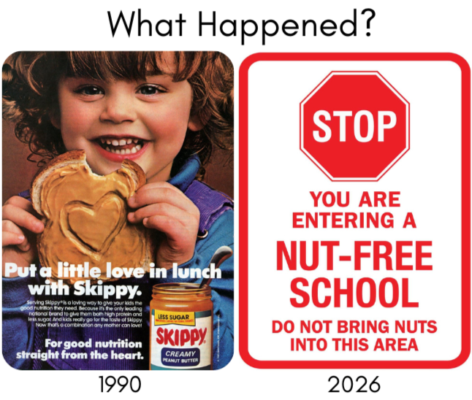
Peanuts in the 1990s vs today

When ‘Fresh Breath’ Comes With a Health Tradeoff

When ‘Fresh Breath’ Comes With a Health Tradeoff

What Mouthwash May Be Doing to Your Oral Microbiome, & Why It Matters for Your Health

By Dr. Yenile Y. Pinto DDS 

Peanuts in the 1990s vs today

When we were kids, peanut butter and jelly sandwiches were everywhere.

It wasn’t my favorite lunch, but I can’t remember sitting at a school lunch table without at least one kid having one.

Now just saying the word peanut in many schools feels a bit like yelling “bomb” at TSA,

and most parents I know have had the same thought:

how did this happen?

Where did all the allergies come from?

What Happened

Part of the reason is that decades-old guidance to delay peanut exposure actually backfired.

Once researchers realized that avoidance was contributing to rising allergy rates, recommendations flipped.

Major pediatric organizations began advising early peanut introduction, and peanut allergy rates dropped significantly in the years that followed.

That shift – from avoidance to thoughtful exposure – stuck with me.

And it made me wonder:

Are we repeating a similar mistake in other areas of health?


Are the everyday things we do for “fresh breath” actually worth questioning?

As a mom of five, I’ve thought a lot about the idea of being “too clean”.

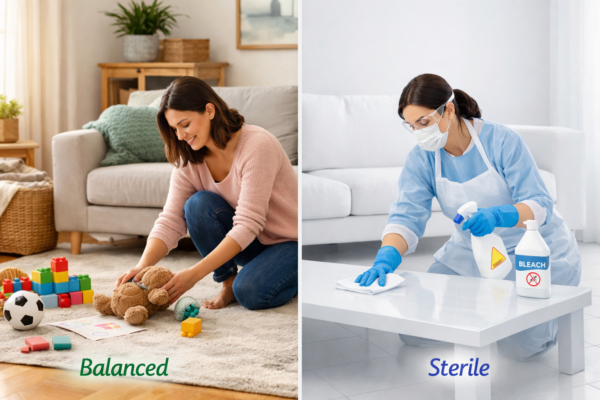
clean vs too clean

My kids play outside.
They get dirty.
We don’t panic about every germ.

Our house is clean, but it’s not sterile.

And at some point, I realized I’d never applied that same thinking to my mouth.

If you use mouthwash, you’re probably doing it for the same reason I did – fresh breath and neutralizing bad bacteria.

It feels clean.
It feels responsible.

But once I started digging into research on the oral microbiome, I realized how oversimplified the “kill the germs” mindset really is.

Clear Retainers: What Dentists and Orthodontists Want You To Know

Your mouth is home to hundreds of species of bacteria.

And not all of them are troublemakers.

Some of them are quietly doing important work for your body,

work that has nothing to do with cavities.

Heart Health

One of the most fascinating examples involves nitric oxide, a molecule that helps blood vessels relax and supports healthy circulation.

Certain oral bacteria help convert nitrates from foods like leafy greens and beets into nitric oxide.

When those bacteria are repeatedly wiped out by strong antiseptic mouthwashes, that pathway gets disrupted.

In a well-known randomized crossover study published in the American Journal of Hypertension, researchers found that using an antibacterial mouthwash for just a few days reduced nitric-oxide–producing activity and raised systolic blood pressure by an average of 2.3 mmHg compared to water rinsing.

Another foundational paper in Free Radical Biology & Medicine showed similar suppression of nitrate-reducing oral bacteria with antiseptic rinses, along with measurable changes in vascular function.

Metabolic Health 

Blood pressure is the most talked-about consequence.

But it isn’t the only one.

In a large observational study led by Harvard researchers and published in Atherosclerosis, people who used antiseptic mouthwash twice daily or more had a significantly higher risk of developing type 2 diabetes over time compared to those who used it less frequently.

The proposed mechanism wasn’t sugar or calories – it was disruption of oral bacteria involved in nitric oxide and insulin signaling.

Inflammation

And then there’s the issue of oral inflammation itself.

Repeatedly disrupting the oral microbiome has been associated with rebound bacterial overgrowth, dry mouth, and shifts toward more pathogenic species that not only lead to cavities and gum disease, but increase your risk of chronic disease and inflammation as well – the very things people are often trying to prevent with mouthwash in the first place.

In other words, stronger isn’t always better.

And sometimes it’s counterproductive.

Mental Health

Here’s one that even surprised me.

With mental health making the headlines nearly daily. I found this to be fascinating.

Emerging research suggests that oral microbiome diversity may also be related to mental well-being.

A large U.S. population study found that adults with less diverse oral microbiomes were more likely to report symptoms of depression, and other analyses have reached similar conclusions, suggesting a possible link between oral bacterial balance and mood. 

What Should You Do?

Now, here’s the important part.

Do these studies mean mouthwash is “bad”?

No.

But the evidence is strong enough – and consistent enough – to say this:

indiscriminately killing oral bacteria on a daily basis comes with real tradeoffs.

And when the potential downsides affect blood pressure, metabolic health, inflammation and even mental health; making a change now is simply a prudent decision.

Long-term studies take decades.

Waiting for absolute certainty when safer, smarter alternatives already exist isn’t caution – it’s inertia.

This also isn’t about skipping mouthwash altogether.

It’s about choosing the right ones.

There are mouthwashes designed to support a healthy oral environment rather than scorch it.

Products that avoid harsh antiseptics, support saliva, and work with the oral microbiome instead of against it.

One I personally use and recommend for my own family is Elementa Silver,  because it focuses on balance, not eradication.

Dr. Pinto with her 5 daughters

And this is where the peanut analogy comes full circle.

We didn’t solve the allergy problem by eliminating peanuts forever.

We solved it by understanding that the body needs the right kind of exposure to develop resilience.

Oral health works the same way.

The goal isn’t sterility.

It’s balance.

If you’d like help choosing products that support a healthy oral microbiome – ones I’ve researched, approved, and personally use for myself and my family – you can click here to download my Clean, Microbiome-Supporting Dental Products List .

I don’t have a financial stake in any of these recommendations.

They’re simply what I believe in, use, and trust.

Keep Smiling,

Dr. Yenile Pinto

P.S. If cavities, gum disease and bad breath are something you’ve battled with for years, I encourage you to schedule a comprehensive oral microbiome analysis. Knowing exactly what you’re up against, is the first step towards taking back control of your mouth and your health. 

Clean, Microbiome-Supporting Dental Products List

Schedule Your Oral Microbiome Analysis Today

Book Now

Sources & Further Reading

Peanut Allergy & Early Exposure

American Academy of Pediatrics.
Peanut allergy rates declined following early introduction guidance.
https://publications.aap.org/aapnews/news/33629


Blood Pressure & Nitric Oxide Pathway

Kapil V, et al.
Antibacterial mouthwash blunts oral nitrate reduction and increases blood pressure.
American Journal of Hypertension.
https://academic.oup.com/ajh/article/28/5/572/174874

Bondonno CP, et al.
Oral microbiome, nitric oxide, and vascular function.
Free Radical Biology & Medicine.
https://www.sciencedirect.com/science/article/pii/S0891584915002350


Diabetes Risk

Joshipura KJ, et al.
Mouthwash use and risk of developing diabetes.
Atherosclerosis.
https://www.sciencedirect.com/science/article/pii/S0021915017302293


Mental Health

Association between oral microbiome diversity and depressive symptoms.
Journal of Affective Disorders.
https://www.sciencedirect.com/science/article/abs/pii/S0165032725003568

Continue reading

Less Screens, Less Fighting

Less Screens, Less Fighting:

What a Screen-Free Road Trip Taught Our Family

By Dr. Yenile Y. Pinto DDS 

The $40 device that cured my husband's sleep apnea

A few years ago, we started limiting screen time in our house.

Our rule is simple:
No screens Monday through Thursday (unless required for school).

Road trips were always the exception.
Until this year.

The idea I Didn’t Love (At First)

As I was making my packing list to take our family on a camping trip, my husband Peter made a suggestion.

“What if we leave the screens at home this year?”

I instantly pushed back.

Five kids.
Seven hours in the car.
Nothing to keep them occupied?

Hard pass.

But then he reminded me of last year.

Two of the tablets being broken and we didn’t have time to replace them, so we decided no tablets was better than the fighting that would most definitely ensue over whose turn it was.

And surprisingly…

It went really well.

Was it a Fluke?

Peter reminded me how the kids fought less, and we had some great moments and fun conversations on that trip.

Was it just a fluke, or was my husband’s intuition right – that maybe the tablets were somehow causing some of the problems?

We weren’t sure, but we decided to go ahead with the experiment and see if no tablets really was responsible for last year’s successful road trip.

The Verdict

With this year’s trip officially over, I can confidently say:

Yes. One hundred percent yes.

Once again:

  • Better behavior

  • Less fighting

  • More connection

Enough that we’ve made a family decision:

All Pinto family road trips are now officially screen-free.

It’s Not Just Us

And it turns out this isn’t just my family being some strange anomaly.

There’s a growing body of research that helps explain why taking the screens away actually made things better.

One peer-reviewed study looking at how digital platforms affect the brain found that:

“frequent engagement with social media platforms alters dopamine pathways, a critical component in reward processing, fostering dependency analogous to substance addiction.”

In other words, the brain starts responding to screens in a way that looks uncomfortably similar to drug addiction.

That helps explain why kids can seem completely fine one moment – and then absolutely lose it the second the screen is taken away.

It isn’t just attitude.
It’s chemistry.

Screens and Attention

Another large study published in Scientific Reports found that:

“increases in screen time in a given year predicted concurrent increases in ADHD symptoms,”

with the strongest effects seen in heavy users and impulsive behavior.

That constant stimulation, novelty, and reward loop doesn’t just disappear when the screen turns off.

It lingers.

Research from the National Institutes of Health echoes this.

In a paper titled Effects of Excessive Screen Time on Child Development, researchers found that:

“screen media use has been shown to negatively affect executive functioning… including working memory, inhibition, and the capacity to switch between tasks.”

Those are the exact skills kids need to regulate emotions, solve problems, and get along with siblings in a confined space like a car.

Brain Development

Even more striking, a JAMA Pediatrics MRI study of preschoolers found that children who spent more than an hour a day on screens showed:

“less development in the brain’s white matter, the region responsible for cognitive and linguistic skills.”

White matter plays a huge role in attention, language, and communication – the very things that seemed to improve for us once the screens were gone.

The Role of Boredom

Harvard Medical School sums it up in a way that really resonated with me.

They explain that:

“much of what happens on screen provides ‘impoverished’ stimulation of the developing brain compared to reality,”

and that children need a mix of online and offline experiences.

They go on to say something that many parents intuitively feel but rarely hear validated:

“Boredom is the space in which creativity and imagination happen.”

That boredom – the kind kids complain about at first – is often where the magic starts.

Less Screens, Less Fighting Deering Dental in Palmetto Bay, near Pinecrest

Even Tech Leaders Know This

And if all of that isn’t reason enough to at least question how much screen time kids are getting, I find it very telling that many of the people responsible for creating this technology are open about how tightly they limit their own children’s access to it.

According to a Business Insider article published January 4, 2026:

“Snap CEO Evan Spiegel limited his then seven-year-old’s screen time to about an hour and a half a week…

Google CEO Sundar Pichai limits TV time and phone access…

and Bill Gates didn’t give his kids phones until age 14.”

Reminds me of the old adage you hear in movies about never getting high on your own supply.

It’s Not Just Screens. It’s The Content.

Today’s kids programming is not what we grew up with.

Much of it is designed for quick dopamine hits, rapid scene changes, constant novelty, and short attention spans.

We’ve started sharing some of our favorite childhood shows and movies with our kids instead – slower-paced stories with richer dialogue and clearer moral frameworks. 

We’ve noticed a difference.

What We’ve Observed

Their attention spans are better.

The more elevated, thoughtful dialogue seems to be expanding their vocabularies.

The traditional family dynamics and values in these older shows have subtly influenced how they see their role in our family.

They’re more willing to help.
More willing to take responsibility.

Final Thoughts

My family isn’t perfect.

My kids still fight and don’t always listen – just like any other kids.

But I’m convinced that our approach to limiting screens has greatly reduced those moments and had an immensely positive effect overall.

Our family’s approach may not be for everyone.

But the next time your kid is melting down, struggling to focus, or picking fights, it might be worth pausing before handing them the iPad – and asking whether the screen is actually helping… or quietly making things harder.

Keep Smiling,

Dr. Yenile Pinto

Functional & Biomimetic Dentist

P.S. Planning a family road trip of your own?
If you want a few practical tips for keeping everyone sane on long drives, you can find our road trip survival tips Click Here  – Just skip the part about tablets.

  • Less Screens, Less Fighting Deering Dental in Palmetto Bay, near Pinecrest

  • Less Screens, Less Fighting Deering Dental in Palmetto Bay, near Pinecrest

Schedule your airway assessment and sleep analysis today

Book Now

Continue reading

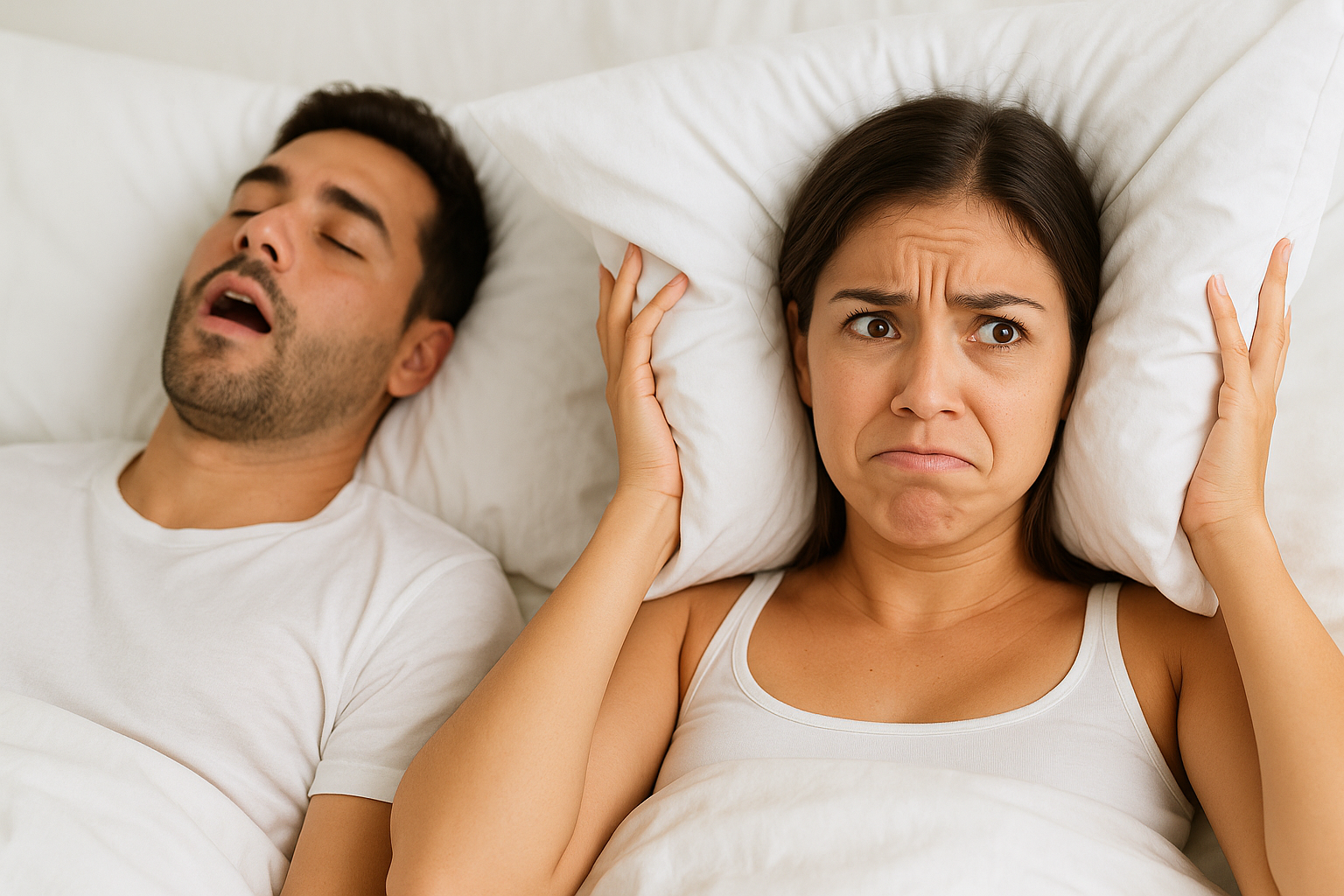
Snoring Husband? Try This

Snoring Husband? Try This.

How a $40 dollar Amazon find, cured my husband’s sleep apnea.

By Dr. Yenile Y. Pinto DDS 

Note: I have no affiliation with Intake Breathing. I am sharing my husband’s story and what worked for him because if you snore, I think it may help you too.

The $40 device that cured my husband's sleep apnea

Do you love your husband, but not sleeping next to him?

That was the problem I was having, and from my conversations with many of you, I know I am not the only one. As a mom of five, getting a good night’s sleep is essential. But what do you do if your husband’s snoring is making it impossible?

And here is the thing about snoring. As a society we act like it is just one of those charming flaws of marriage, like leaving socks on the floor. But the research is clear. It is a red flag for deeper problems no one talks about, not even your doctor unless you drag it out of them.

Snoring isn’t a sound. It is a symptom.

Peter’s story

Peter wasn’t always a snorer, but over the years the problem got worse and so did his sleep. He would wake up feeling more tired than when he went to bed and describe a persistent brain fog that made it hard to focus or remember things. He would often tell me, “I don’t know what changed, but I feel like I just can’t sleep anymore and I’m always running on fumes.”

My husband is an active guy and not overweight, so that wasn’t the issue. We tried a few different pillows to keep his neck in better alignment and finally found one that helped a little, but still not enough.

Next, I treated him with Invisalign. Peter had a collapsed bite and when he bit down, you couldn’t see his bottom teeth at all. The functional dentist in me knew that with his mouth closed that much, his tongue was resting too far back at night, disrupting his breathing and hurting his sleep. Twelve months of Invisalign later, his bite was dramatically improved, his sleep got better and he was snoring less, but it wasn’t enough. We were still missing one piece of the puzzle.

The main culprit

Peter has a deviated septum. It was never a problem before, but something I know now that I didn’t then, is that a deviated septum can get worse over time. Cartilage can weaken or shift as you get older, injuries can make things worse, and even mild allergies can cause inflammation that makes nasal breathing at night nearly impossible.

We looked into what could be done, and the definitive treatment was surgery, but Peter wasn’t ready for that yet, so we started exploring other options.

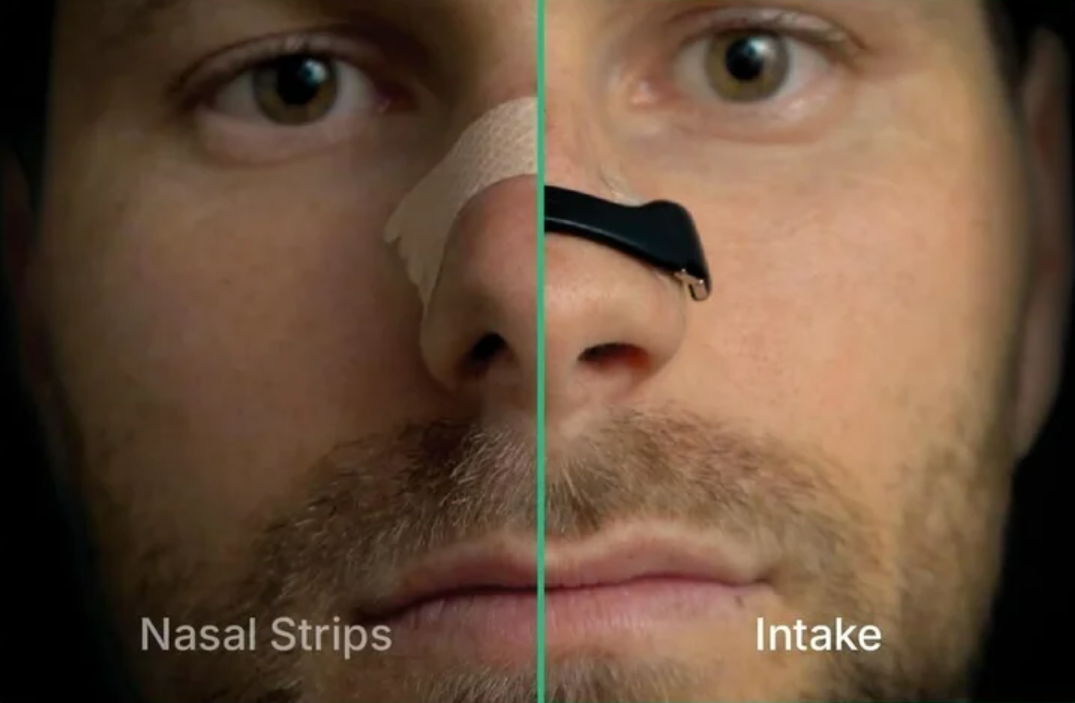
Breathe Right nasal strips helped a little but not enough.
We tried nasal dilators, but Peter found them impossible to wear. He said, “It feels like a giant booger and my nose will not stop dripping.”

The solution

I shared an ad I saw on Instagram for a magnetic nasal strip called Intake Breathing. Peter said it looked like an overpriced Breathe Right strip and just more junk being peddled by social media influencers. I thought that was the end of it. Then he came home from motorcycle racing and said another rider was wearing them and told him it was like a supercharger for his nose. Even better, his helmet stopped fogging up because he was no longer mouth breathing. Peter ordered it right away.

Snoring Husband? Try This Deering Dental in Palmetto Bay, near Pinecrest

When it arrived, he tested it out and immediately said, “This is amazing. Is this what breathing feels like for normal people?”

After a month we ran another sleep analysis and his results were amazing.

Before Intake Breathing: Moderate sleep apnea, nightly snoring, shallow sleep, morning exhaustion.


After Intake Breathing: zero apnea and the first deep sleep he had experienced in years.

For forty dollars!

Clear Retainers: What Dentists and Orthodontists Want You To Know

Down the line, my husband says he will probably need the surgery for his septum, but until he is ready for that, this is a great solution. Snoring can have many causes and often needs a multifaceted approach, as was the case with my husband. But if you or someone you care about is snoring, I highly recommend giving Intake Breathing a try. It’s been life changing for us.

You don’t have to spend your life always tired and in a fog. If you feel like there is more to your sleep issues, call my office to schedule a full airway assessment and home sleep analysis.

Schedule your airway assessment and sleep analysis today

Book Now

Continue reading

Clear Retainers: What Dentists and Orthodontists Want You To Know

Clear Retainers: What Dentists and Orthodontists Want You To Know

Clear Retainers: What Dentists and Orthodontists Want You To Know

By Dr. Yenile Y. Pinto DDS as featured in Woman’s World

By Dr. Yenile Y. Pinto DDS as featured in Woman’s World

This article was featured in Woman’s World by By Nick Hazleton. February 6, 2025

Clear Retainers: What Dentists and Orthodontists Want You To Know

We talked to dental professionals who that clear retainers are one of best ways to maintain your smile after braces

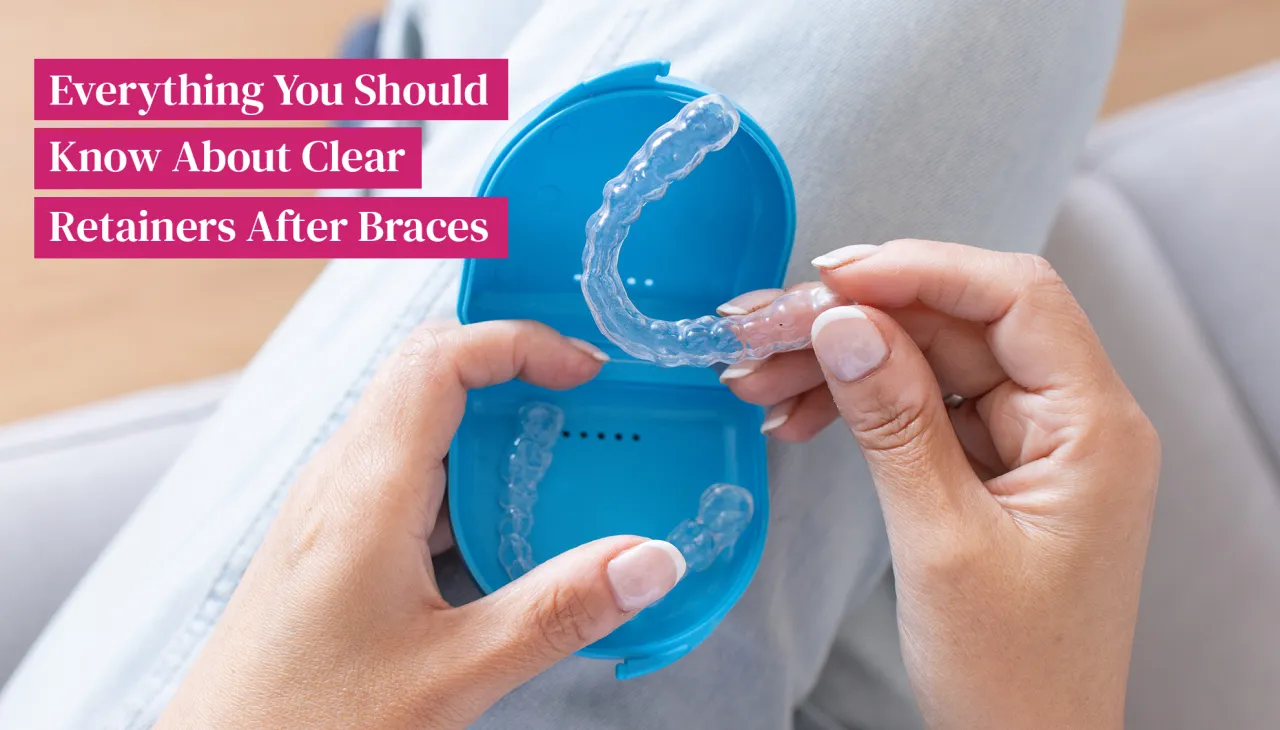
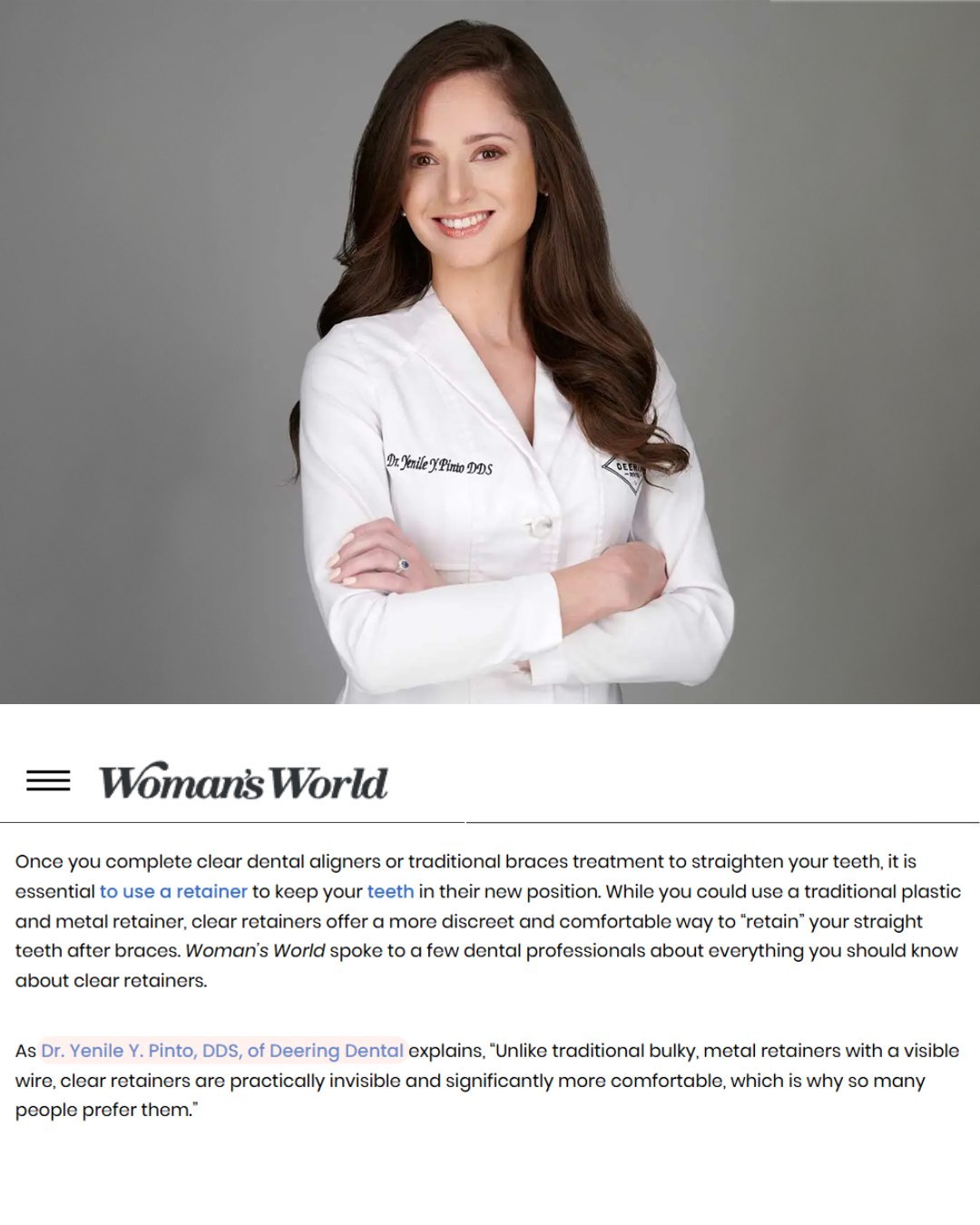
Once you complete clear dental aligners or traditional braces treatment to straighten your teeth, it is essential to use a retainer to keep your teeth in their new position. While you could use a traditional plastic and metal retainer, clear retainers offer a more discreet and comfortable way to “retain” your straight teeth after braces. Woman’s World spoke to a few dental professionals about everything you should know about clear retainers.

As Dr. Yenile Y. Pinto, DDS, of Deering Dental explains, “Unlike traditional bulky, metal retainers with a visible wire, clear retainers are practically invisible and significantly more comfortable, which is why so many people prefer them.”

Clear retainers maintain your smile after braces

Throughout orthodontic treatment, invisible aligners or braces slowly and gently straighten your teeth. However, your teeth will naturally want to return to their natural position. 

Clear retainers are crucial for maintaining the results of your orthodontic work. After braces or aligners, your teeth need time to stabilize in their new positions. A retainer ensures they stay aligned, preventing unwanted movement. It is a simple, effective way to protect the investment you have made in your smile. 

Speaking from personal experience, I’ve used a clear retainer after completing my invisible braces and the gap in my front teeth starts to reopen at the end of the day. The clear retainer I use at night closes the gap again at night. Dr. Pinto says, “Your teeth love to move. After spending months (or years) in braces or aligners, your teeth will naturally want to shift back to their old positions—it’s just how biology works.” 

Clear retainers are not just for braces patients

While the main use of clear retainers is after a braces treatment, Dr. Pinto recommends them even for patients with naturally straight teeth: “Ever notice how everyone’s grandparents have crowded and overlapping teeth, especially on the bottom? Teeth are constantly moving throughout your entire life and are one of the tell tale signs of age. If you love your smile, I recommend you get a retainer to keep it that way.” 

Retainers aren’t just for people who have done braces or Invisalign. They’re for anyone who wants to preserve their beautiful youthful smile for life

Clear retainers are more discreet than traditional metal retainers

Dr. Pinto also recommends clear retainers over metal: “I recommend clear 100% of the time, especially because at first, you’ll need to wear your retainer all day until your teeth settle into their new positions. Unless you want to go to that work meeting or cocktail party looking like an eighth grader with a mouth full of metal, go for the clear.”

Dr. Pinto’s tips for keeping clear retainers clean

  • Never brush them with toothpaste: “This creates micro-scratches where bacteria love to hide, turning your beautiful retainer into a smelly dull discolored mess.”
  • Rinse: “Always rinse them with fresh cold water when you remove them. Leaving bacteria harboring saliva or debris in your trays will turn them into something you don’t want to put in your mouth a lot faster than you think.”
  • Avoid hot water:  “It can warp the plastic and ruin your retainer.”
  • Soak in a 50/50 hydrogen peroxide solution: “You don’t need any fancy products to keep your trays looking great. Every morning, I rinse my retainers, place them in their case and pour in some water and a little hydrogen peroxide and let them soak during the day. At night, I rinse the case and trays in the sink before putting the retainers on. It’s been over a year and they still look great.”

Using an ultrasonic cleaner for clear retainers

Dr. Pinto says if you want super clean retainers, using a small ultrasonic cleaner once a week will do the trick: “It uses vibrations to clean out even the tiniest of scratches leaving your trays looking spotless. I bought one online that also had a built-in UV disinfecting light along with a 140pk of retainer cleaning tabs and spent less than $30. It’s worth it.”

If those tips don’t get your retainers clean, it is likely time to order a new one: “No matter how well you care for them, clear retainers don’t last forever. If yours are looking cloudy and gross, it might be time for a replacement,” explains Dr. Pinto.

Book your complimentary Invisalign consultation today

Book Now

Continue reading

Dentist using state-of-the-art equipment at Deering Dental

Perfect Smile 101: 8 Factors Your Cosmetic Dentist Should Never Overlook

Perfect Smile 101: 8 Factors Your Cosmetic Dentist Should Never Overlook

By Dr. Yenile Y. Pinto DDS

Beware the Bargain: Exposing the Truth About Cheap Veneers

When it comes to smiles, you have your own version of “perfect.” For some, it’s a big, bold smile, while others prefer something more subtle and natural. But achieving your ideal smile isn’t about just picking a look out of a catalog. It’s about considering all the factors that make up your unique smile — from the shape of your teeth to your facial structure, and yes, even your personality.

So, what exactly makes up the perfect smile? Let’s break it down.

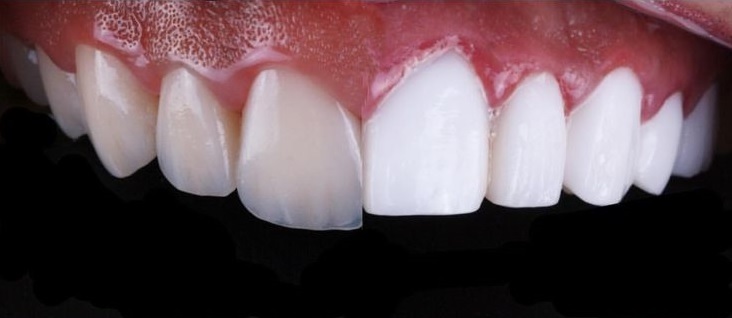
1. Shape Matters

One of the first things you need to consider when designing your smile is the shape of your teeth. The shape should complement your face, which means your ideal smile will look different than someone else’s. For example, men often have larger more square-shaped teeth, while women’s teeth tend to have softer, more rounded edges. So, are you after a bold, more striking smile, or would something more delicate suit you better? It’s all about finding the right balance that feels true to you.

If you’re not sure what works best, don’t worry! I’ll guide you through your options and help you decide what shape highlights your best features without overpowering them.

2. The Truth About Tooth Color

Tooth color is one of the most important elements of your smile, and while you may be tempted by ultra-white teeth, it’s crucial to find the right shade that looks natural. Believe it or not, too white teeth don’t look good on anyone because real teeth can never be that white. Those super-white, chiclet teeth? They’re like the Michael Jackson nose job of dentistry — they look completely fake and unnatural, and everyone will know from a mile away that you’ve had dental work.

Instead, you want a shade that complements your skin tone and feels authentic. We’ll help you find that perfect shade that makes your smile look fresh, youthful, and still 100% you. A natural smile is always going to be more beautiful than one that looks artificial.

Perfect Smile 101: 8 Factors Your Cosmetic Dentist Should Never Overlook Deering Dental in Palmetto Bay, near Pinecrest

3. The Ideal Timeline

Perfection doesn’t happen overnight. If you’re planning a smile makeover, you need to be willing to invest time in the process if you want beautiful long-lasting results. Sometimes, achieving your ideal smile means taking extra steps, like using Invisalign to create a better foundation before we even think about veneers or other treatments. This little bit of extra time up front can help you get your dream smile with less drilling and loss of natural tooth. This approach will not only provide you with a more beautiful smile, it also means your dental work will last many years longer and avoid the pain, sensitivity and complications that are common with rushed and overly aggressive dental work.

Remember, it’s not a sprint. The journey to your best smile is personal, and I’ll work with you to set realistic timelines based on what you’re looking for.

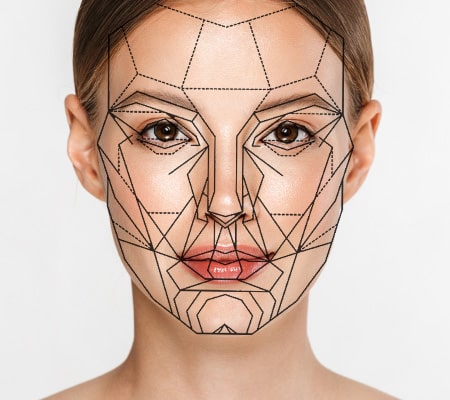
4. Facial Structure: Framing Your Smile

Your smile isn’t just about your teeth. It’s about how your smile fits within the rest of your face. When designing your smile, we’ll consider your facial structure to make sure your teeth complement the shape of your face. From the size and angle of your teeth to the way your gums frame your smile, every detail matters.

By getting the proportions just right, we can enhance your natural beauty and even help create a more youthful, balanced appearance.

Perfect Smile 101: 8 Factors Your Cosmetic Dentist Should Never Overlook Deering Dental in Palmetto Bay, near Pinecrest

5. Your Personality Plays a Role

Believe it or not, your personality is a key factor when designing your smile. Are you someone who loves to stand out with a big, bold smile, or do you prefer something more understated? Your smile should reflect who you are.

We’ll talk about what feels authentic to you. If you want a smile that says, “Here I am,” we’ll create something that reflects that confidence. But if you’re going for something more subtle and delicate, we can design a smile that whispers rather than shouts.

6. Creating the Ideal Foundation

Just like a home, your smile needs to be built on a strong healthy foundation, Before diving into cosmetic changes. This is where biomimetic dentistry comes in. It’s like functional medicine for your teeth — we look at the big picture and treat the root cause rather than just the symptoms.

For some, this might mean starting with Invisalign to straighten your teeth and create the right foundation for veneers or other enhancements. Doing this allows us to avoid unnecessary drilling and keep your natural teeth as intact as possible, giving you a beautiful, long-lasting smile with minimal intervention. 

Perfect Smile 101: 8 Factors Your Cosmetic Dentist Should Never Overlook Deering Dental in Palmetto Bay, near Pinecrest

7. Working Together for Your Dream Smile

Designing the perfect smile is a collaboration. During your consultation, we’ll talk about what you’re not happy with, what your goals are, and what the ideal smile looks like for you. Think of it like working with a personal stylist — we’ll explore your options for shape, size, and even the angle of your teeth to find what fits you best.

The goal is to create a smile that reflects your individuality and makes you feel confident every time you use it.

8. Less is More: Minimally Invasive Options

At Deering Dental, we believe in preserving as much of your natural tooth structure as possible. That’s why we focus on biomimetic dentistry, using materials and techniques that mimic the natural function and appearance of your teeth.

This means fewer veneers, less drilling, and more emphasis on treatments that protect the health of your teeth for the long haul. Your perfect smile shouldn’t just look good now — it should be built to last.

Your Perfect Smile Awaits: At the end of the day, your perfect smile is about more than just looks. It’s a combination of health, beauty, and you. Whether you’re dreaming of a big transformation or a more subtle enhancement, we’ll work together to make sure your smile is uniquely yours. Let’s create a smile that reflects the best version of you, both inside and out.

Perfect Smile 101: 8 Factors Your Cosmetic Dentist Should Never Overlook Deering Dental in Palmetto Bay, near Pinecrest

Book your complimentary cosmetic consultation today

Book Now

Continue reading

Dr Villena Headshots

How Dr. Villena’s Passion for Functional Medicine Transforms Smiles:

How Dr. Villena’s Passion for Functional Medicine Transforms Smiles:

By Dr. Yenile Y. Pinto DDS

How Dr. Villena’s Passion for Functional Medicine Transforms Smiles: Deering Dental in Palmetto Bay, near Pinecrest

A Conversation with Deering Dental’s Newest Doctor

At Deering Dental, we believe in bringing together the best talent and passion for delivering exceptional care. That’s why I’m thrilled to introduce Dr. James Villena to you. He brings an impressive background and a heart for service, and I (Dr. Pinto) had the pleasure of sitting down with him for a candid conversation about his journey and approach to dentistry.

Dr. Pinto: James, it’s been such a joy having you join the team. Our guests are curious to know more about you, so let’s start with the big one: what made you choose dentistry?

Dr. Villena: Thanks, Yenile! Honestly, my journey started with my grandfather. He was in medical school in Cuba before he left for the U.S., and his stories of wanting to help people really inspired me. I was drawn to medicine, but after shadowing different fields, I realized that dentistry combined my love for science with the hands-on care I wanted to provide. It just felt like the right fit.

Dr. Pinto: And you’ve certainly made the right choice! What’s your philosophy when it comes to guest care?

Dr. Villena: For me, it’s all about seeing the whole person, not just their mouth. Dentistry is often focused on treating specific problems in the mouth, but I think it’s important to consider a guest’s overall health. That’s why I’m so passionate about biomimetic dentistry — it’s like functional medicine for the teeth. We’re using advanced techniques and materials to preserve the natural structure as much as possible, which is more sustainable for long-term health.

Dr. Pinto: Yes! That’s exactly what we believe here at Deering Dental. We want to provide solutions that are not only effective but also respectful of the body’s natural design. Biomimetic dentistry allows us to do just that.

Dr. Villena: Absolutely. I’ve seen firsthand how this approach can change lives. It’s amazing when a guest comes in anxious about treatment, and over time, you can watch that anxiety fade as they start to trust the process. It leads to better outcomes in the long run because they’re no longer avoiding the care they need.

Dr. Pinto: Trust is huge. I know you’ve worked with a lot of guests who had complex health needs, especially during your residency. Can you tell us a bit about that?

Dr. Villena: Sure! I completed my General Practice Residency in Hospital Dentistry at the University of Alabama at Birmingham. That experience was so rewarding because I got to work with patients who had serious medical conditions. It really reinforced the idea that dental care isn’t just about teeth—it’s about overall health. Being able to help those guests, many of whom were dealing with major health issues, was incredibly fulfilling.

Dr. Pinto: I love that. And it’s such a good fit for Deering Dental, where we take pride in providing comprehensive care. What brought you to us, by the way?

Dr. Villena: To be honest, it was biomimetic dentistry. I was looking for a place where I could really focus on preserving tooth structure and using modern techniques to mimic the natural properties of teeth. When I found out about Deering Dental and your commitment to biomimetic care, I knew this was the right place for me. I also admire how we’re able to offer a personalized experience to every guest — it’s not just about fixing a problem, it’s about making sure the guest feels heard and respected.

Dr. Pinto: And I’m so glad you’re here! We’ve seen so much success with biomimetic techniques, and having you join us has only strengthened that. So, what’s next for you in terms of professional development?

Dr. Villena: I’m always looking to learn more. I’ve been taking more courses in biomimetic dentistry, dental materials, and implant therapy. I recently completed the MaxiCourse at NOVA and am preparing to take the exam for my associate fellowship in the American Academy of Implant Dentistry. I also plan to enroll in advanced restorative programs like Oasis Dental Academy to keep pushing forward.

Dr. Pinto: It’s clear that you’re dedicated to your craft! But what about life outside of the office? Our guests love to know a bit about what makes their dentist tick beyond the chair.

Dr. Villena: When I’m not at the office, I really enjoy spending time outdoors. I love fishing and cooking — they’re my favorite ways to unwind. I also go on walks with my dog, and I’m a big sports fan. Spending time with family and going to mass every Sunday are also important to me. Faith and family ground me, and I try to carry that sense of gratitude into my practice every day.

Dr. Pinto: That balance is so important, and I know our guests will appreciate the calming, thoughtful presence you bring. One last question, James — if you could tell our guests one thing about your approach to dentistry, what would it be?

Dr. Villena: I’d want them to know that my goal is to make them feel listened to and respected. Dental care is deeply personal, and I want to build trust with each guest so they know they’re in good hands. I’m grateful for the chance to serve this community and be a part of the Deering Dental family.

Dr. Pinto: Well said, James! We’re so lucky to have you on board, and I know our guests are going to love getting to know you just as much as we have.

Dr. Villena’s dedication to compassionate care and his passion for biomimetic dentistry make him a fantastic addition to Deering Dental. I’m thrilled to welcome him, and I know you will appreciate his approach to preserving natural health while providing top-tier dental care.

Book your complimentary cosmetic consultation today

Book Now

Continue reading

Beware the Bargain: Exposing the Truth About Cheap Veneers

Beware the Bargain

Beware the Bargain: Exposing the Truth About Cheap Veneers

By Dr. Yenile Y. Pinto DDS

Beware the Bargain: Exposing the Truth About Cheap Veneers

Just the other night, after the day’s chaos had settled and my daughters were finally asleep, I found myself scrolling through Instagram. Yes, I know, not the best habit. But there it was, an ad that stopped me in my tracks: “20 Porcelain Veneers for Just $7,499”. Now I know that $7,499 doesn’t seem like a little bit of money, but to put that into perspective, that price is less than what it costs me to do 20 veneers. Seeing that offer made me angry, not just as a dentist but as someone who cares deeply about the well-being of people looking to improve their smiles. It also brought to mind a recent guest of mine who took advantage of one of these offers.

Jose’s Story

Jose came to me after he fell for one of those too-good-to-be-true deals, dreaming of a perfect smile that instead turned into a bit of a nightmare. I met Jose after he lost trust in the doctor who performed his veneers. At our first visit together he said to me, 

At first I thought I got a great deal. I was really happy with how everything looked, but that quickly changed for the worse. I began to notice that things didn’t feel right when I would bite down and soon after that some of my veneers began to fall off. I went back and they would cement it in place again, but a month or two later it would happen again. 

Aside from his veneers popping off at the slightest provocation, Jose had some sensitivity from unnecessary drilling, and now, he’s staring down the barrel of crowns, root canals and thousands in additional expenses to rectify the situation. When I asked him about his experience in hindsight he told me, 

“I wish I’d done a little more homework before moving forward. Looking back now I realize there were some red flags that should have prompted me to go somewhere else before making my decision” 

It breaks my heart because Jose, like you, deserves so much better and unfortunately I’m seeing guests like Jose, more and more frequently. 

The good news is that this doesn’t have to happen to you. By asking a few questions and knowing what to look for, you can get a beautiful smile that is going to look completely natural and stand the test of time. 

So what do you need to know?

First, when faced with veneer offers that seem too good to pass up, it’s vital to remember that quality and durability in dental work come from expert planning, high-quality materials, and a treatment plan tailored to your unique dental needs. These too-good-to-be-true deals often overlook the essential steps required for veneers that not only look beautiful but last for years to come. How do you know if the deal is just too good? I’d say as a general rule, that good porcelain veneers generally run about $1,000 to $3,000 per tooth, depending on materials and whether your dentist uses a master ceramist or not. A master ceramist is a tooth artist who specializes in making restorations that look completely natural. These artists are masters of their craft and they’re not cheap, but if you want your smile to look indistinguishable from the real thing, then they can be a worthwhile investment.  

A Strong Foundation

Your final results are hugely impacted by the current condition and placement of your teeth. Creating an ideal foundation as a starting point is critical in order to achieve great results as well as to reduce and in some cases completely negate the need to drill your existing teeth. In my practice for example, we believe in a conservative approach that prioritizes your dental health and aesthetic goals equally. This philosophy might lead me to recommend preparatory treatments like Invisalign to move your teeth first in order to provide the ideal foundation for veneers, minimizing the need for extensive alterations to your natural teeth and in many cases saving you money because you will be able to get the smile of your dreams with fewer veneers.

Crafting Your Unique Smile Together

Your smile makeover should be a collaborative process. During your consultation, your dentist should discuss your vision to be clear on the results you hope to attain, evaluate your dental health, and use this information to craft a personalized plan. The consultation should feel like you’re sitting down with an interior decorator or personal stylist who wants to understand your personality and what looks good to you as well as provide you with advice on color, shape and size that compliment the shape of your mouth and contours of your face, ensuring the final result reflects your individuality and enhances your natural beauty.

Caring For Your Veneers

Aftercare is straightforward yet essential. A good dentist will guide you on how to care for your veneers, from daily hygiene routines to considering protective measures like a night guard if you grind your teeth. These steps are crucial in protecting your new smile and ensuring its longevity.

Investing in Your Smile

It’s important to view quality dental work as an investment in yourself. While the initial cost may be higher than some bargains you’ll find, investing in high-quality veneers means avoiding future expenses for corrections or replacements. Your smile is one of the first things people notice and it is an integral part of who you are.  Ensuring its care is a worthwhile investment.

Your Smile, Our Commitment

Jose’s story serves as a poignant reminder of the importance of choosing wisely when considering cosmetic dental treatments. If veneers are something you’re thinking about, remember, the right approach and a little patience can lead to a smile that’s not just beautiful today but will be part of your joy for years to come.

If you’re ready to explore the possibilities for your smile, I’m here to help guide you through the process with the care, expertise, and dedication you deserve. Let’s create a smile that truly reflects the best version of you.

Book your complimentary cosmetic consultation today

Book Now

Continue reading

What Our Guests Say

Less dentistry.  Better health.

Deering Dental - 16709 Old Cutler Rd. Palmetto Bay, FL 33157

OFFICE HOURS

Monday 9:00 AM - 5:00 PM

Tuesday 9:00 am - 5:00 pm

Wednesday 10:00 am - 6:00 pm

Thursday 9:00 am - 5:00 pm

Friday Limited Availability for Select Appointments

Deering Dental Miami
Skip to content